Wedding shoes are bought in the wrong order. The dress comes first, then the venue, then, a fortnight before, a pair of heels chosen in a panic from whatever is left in a size 38. The result is a beautiful gown standing on something that hurts by the first course. Buy the shoes when you buy the dress, wear them at every fitting, and pick them the way you would pick anything you will stand in for ten hours.
Everything below is white, ivory or silver, because a bridal shoe in any other colour is a decision the dress did not ask for. Four groups: satin, the heels you can actually dance in, the pair that is allowed to be too much, and the flats. If the ceremony is on grass, skip straight to the block heels and the flats.
One · Satin
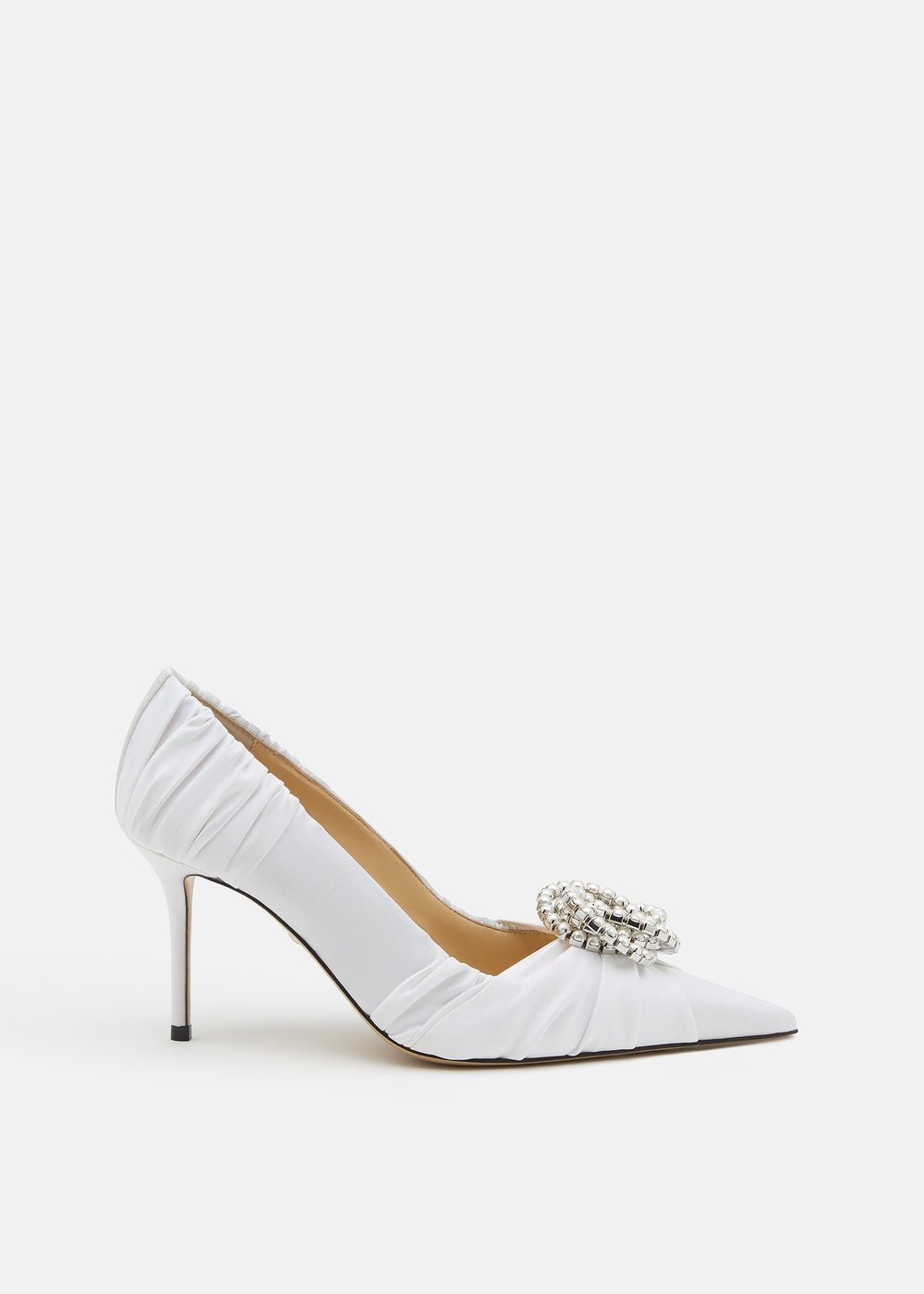
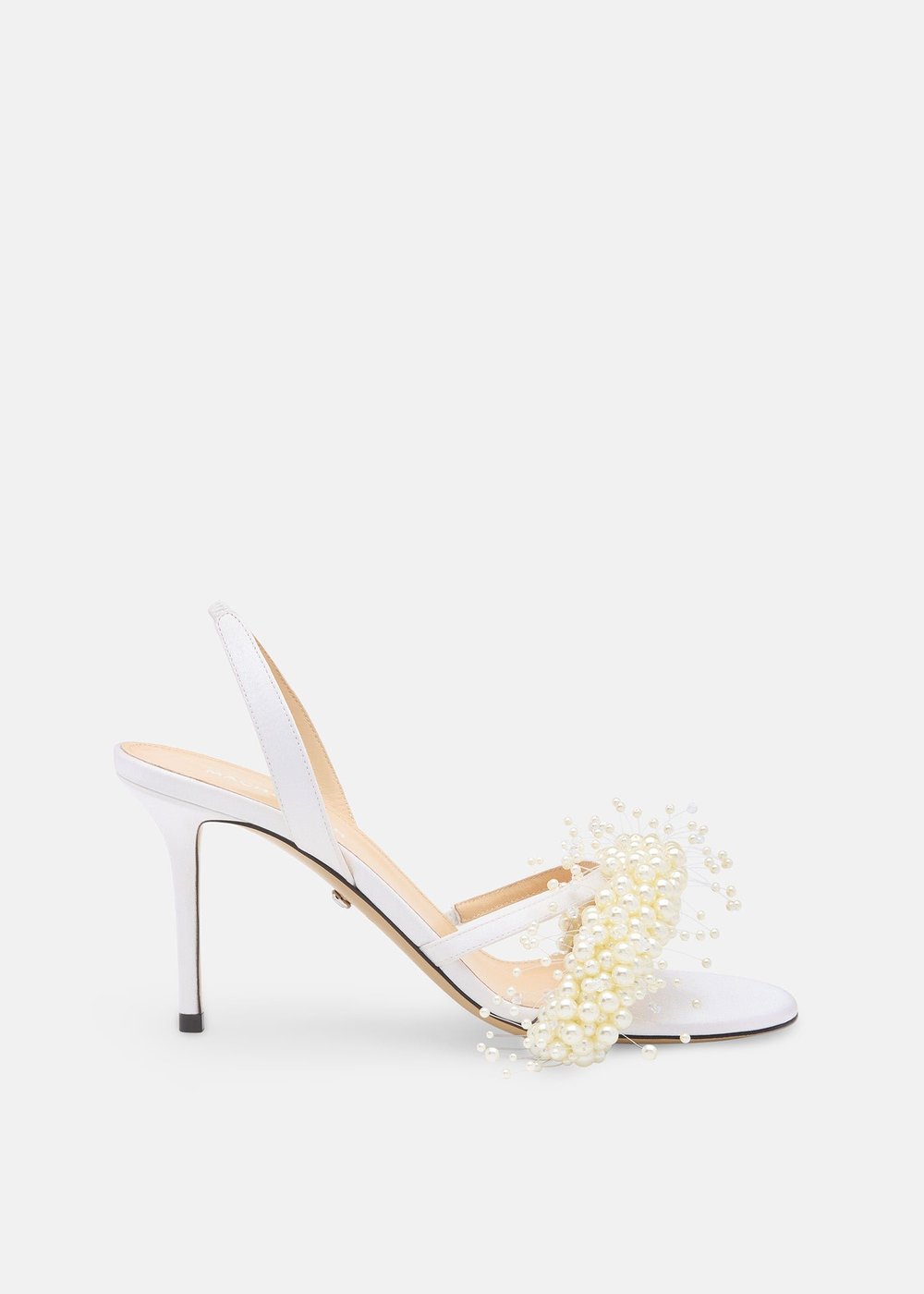
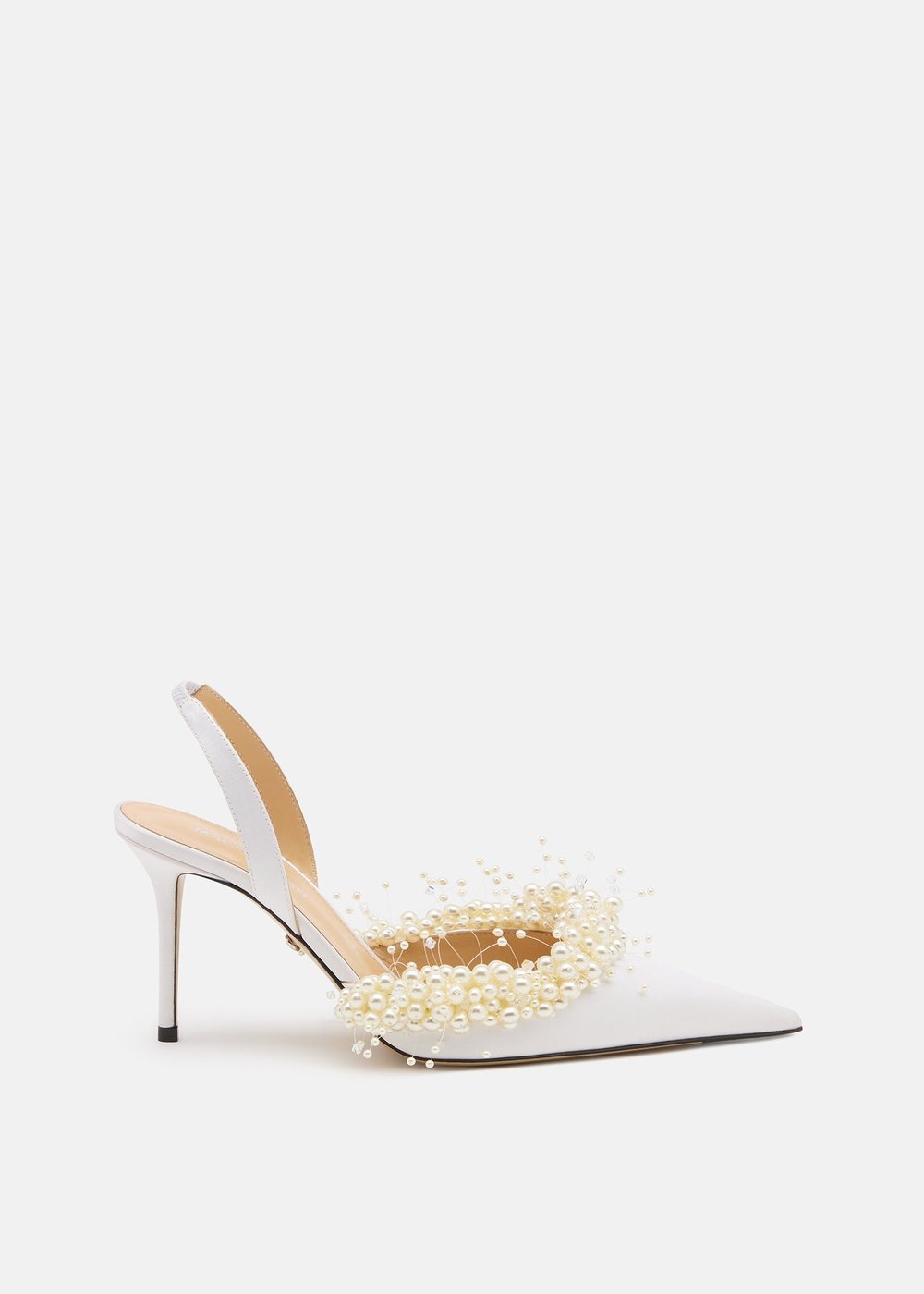
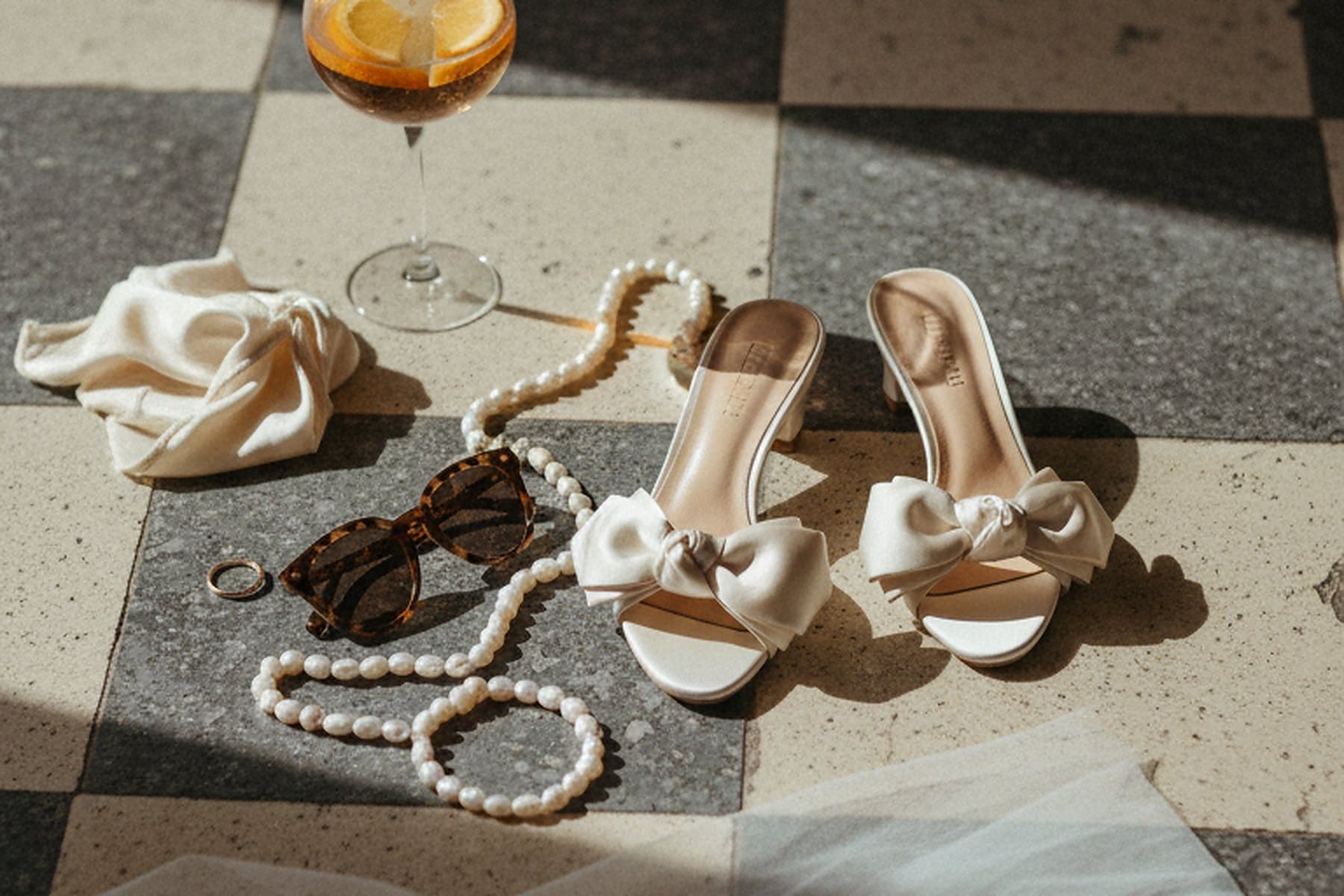
Satin is the bridal material because it takes light the way the dress does. Mach & Mach make the satin shoe you see in every bridal editorial, and the reason is the pearl: two strands across the foot, floating just off the satin, and the whole shoe reads as jewellery. The Galaxy pump is the plain version, one crystal bow and nothing else. The slingback is the one to buy if you are unsure: it holds the foot through a ceremony and a dinner, which the open sandal does not.
Two · The ones you can dance in
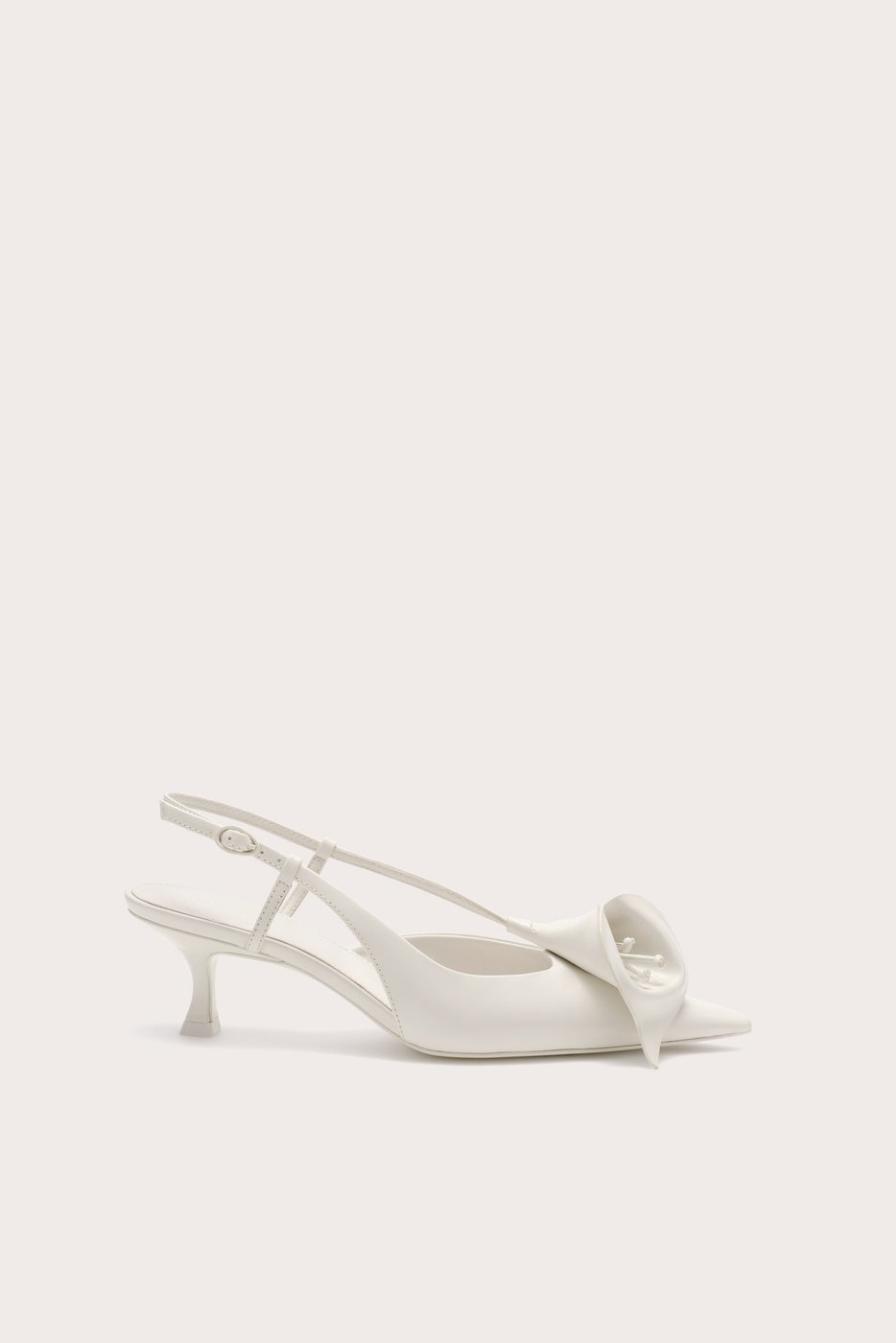
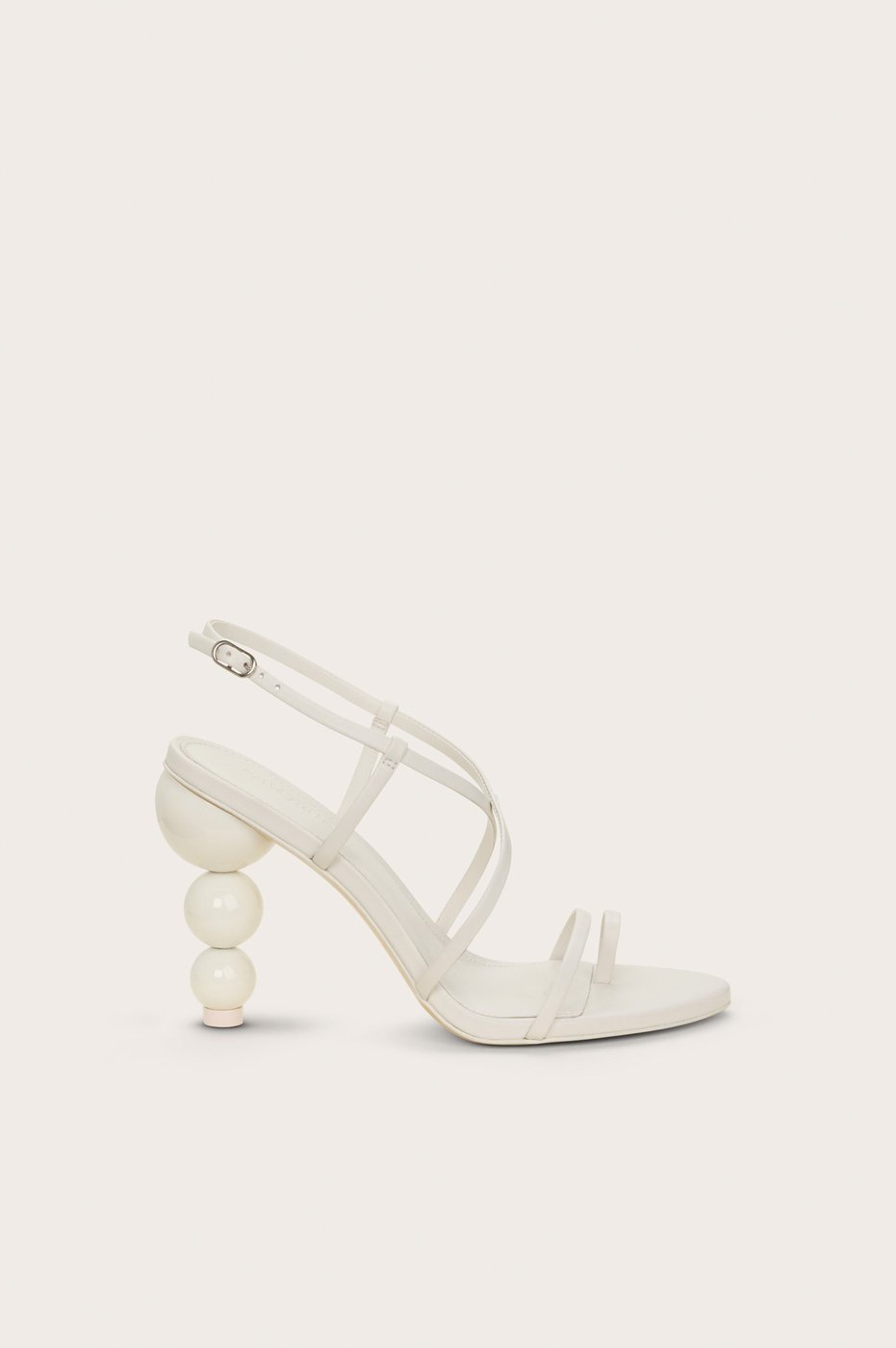
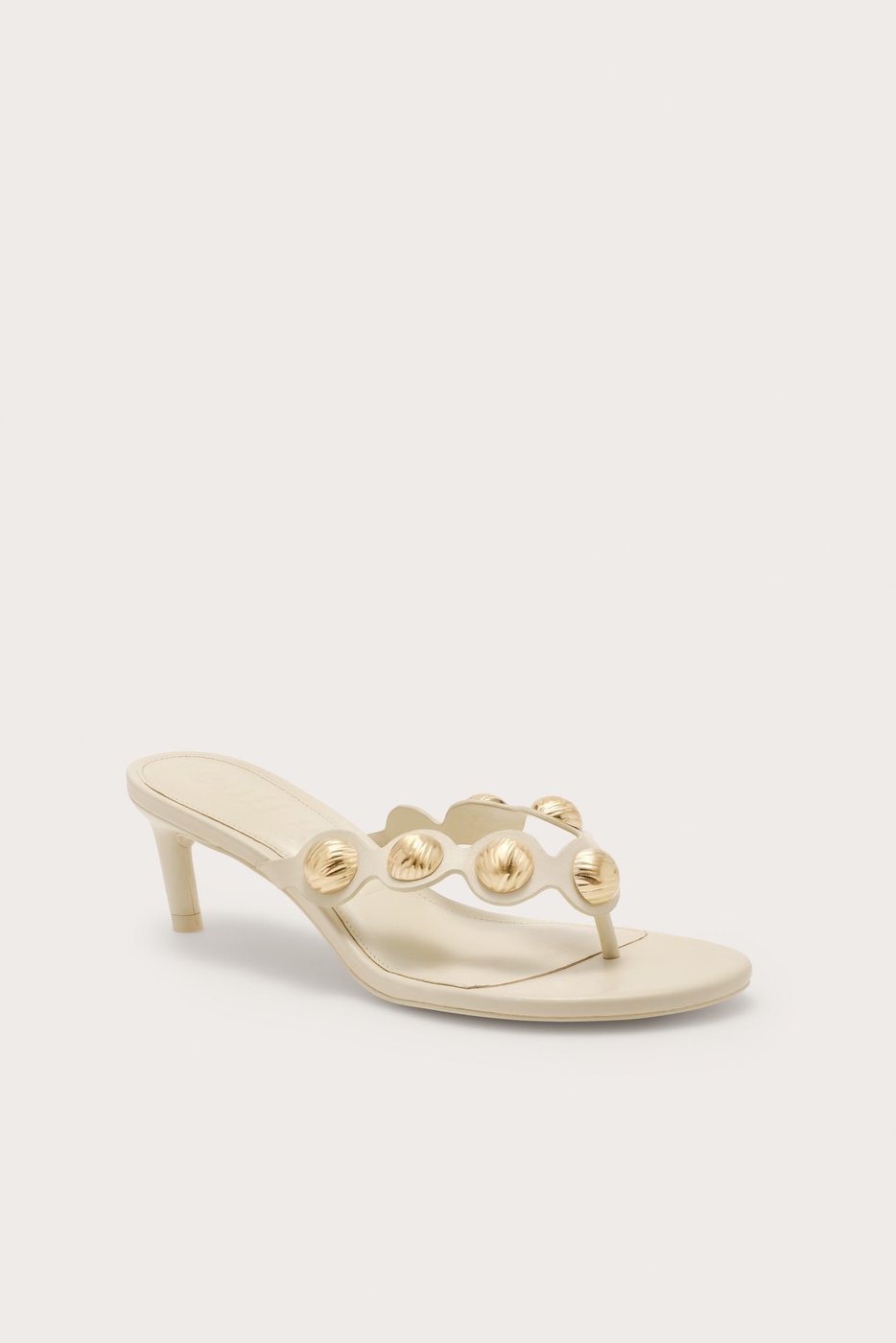
A kitten heel is the bridal shoe that lets you forget about the shoe. Four centimetres is enough lift to keep a hem off the ground and not enough to change how you walk. Cult Gaia's antique white is warmer than most ivories, which suits a champagne or oyster gown better than a bright white does. Hold the shoe against the dress in daylight before you decide.
Wear them at the fittings. The hem is pinned to the shoe, not to the floor, and a change of heel height after the last fitting is a hem that drags or a hem that floats.
Three · Over the top
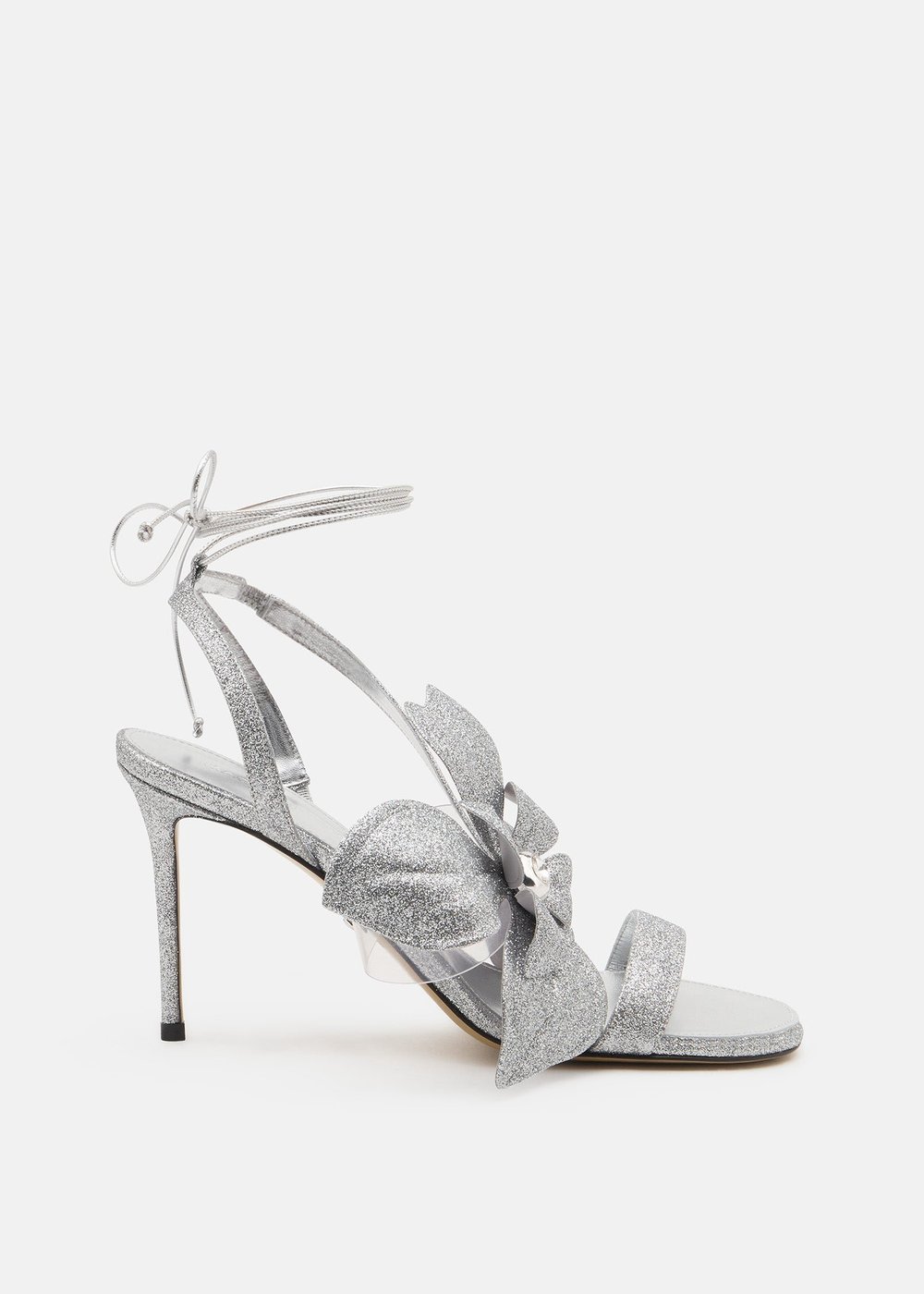
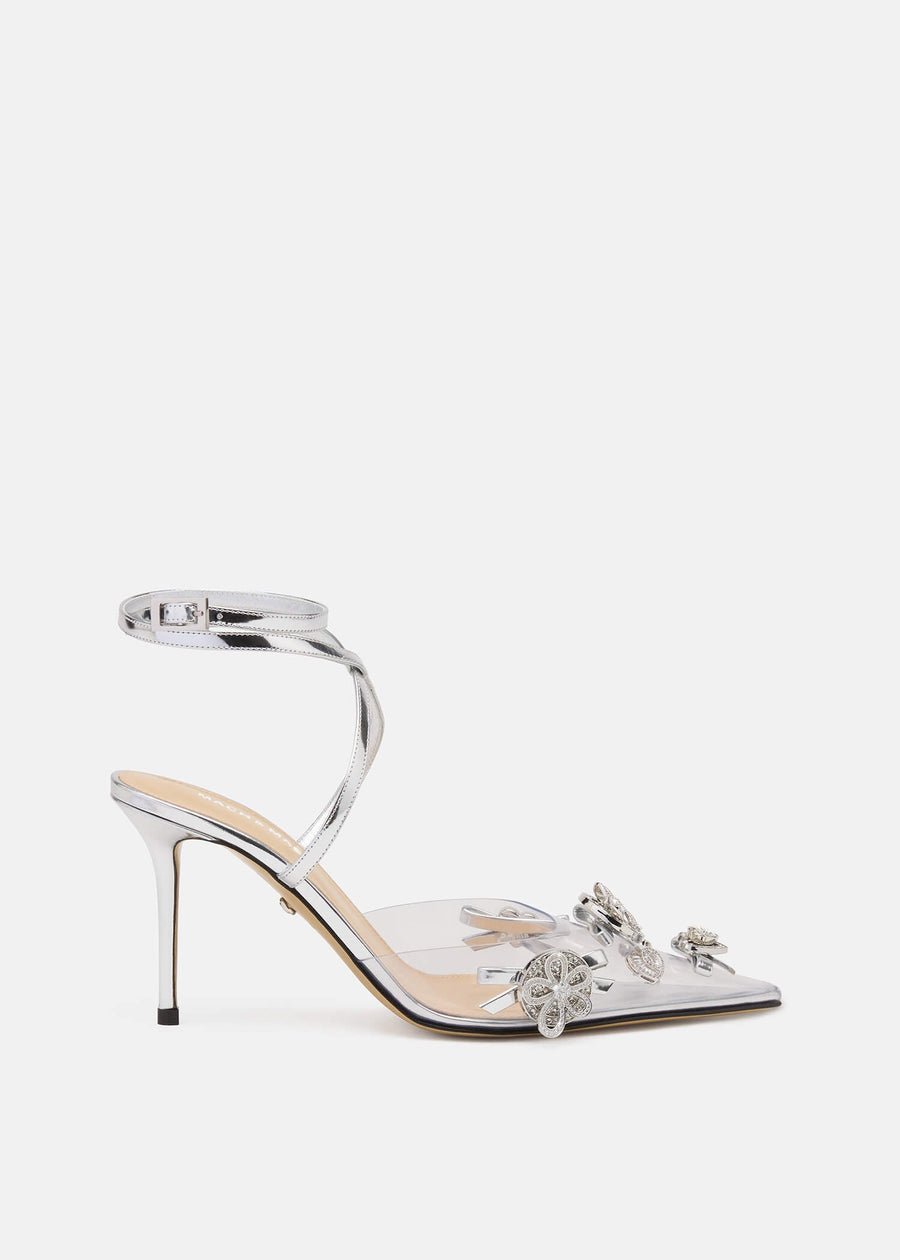
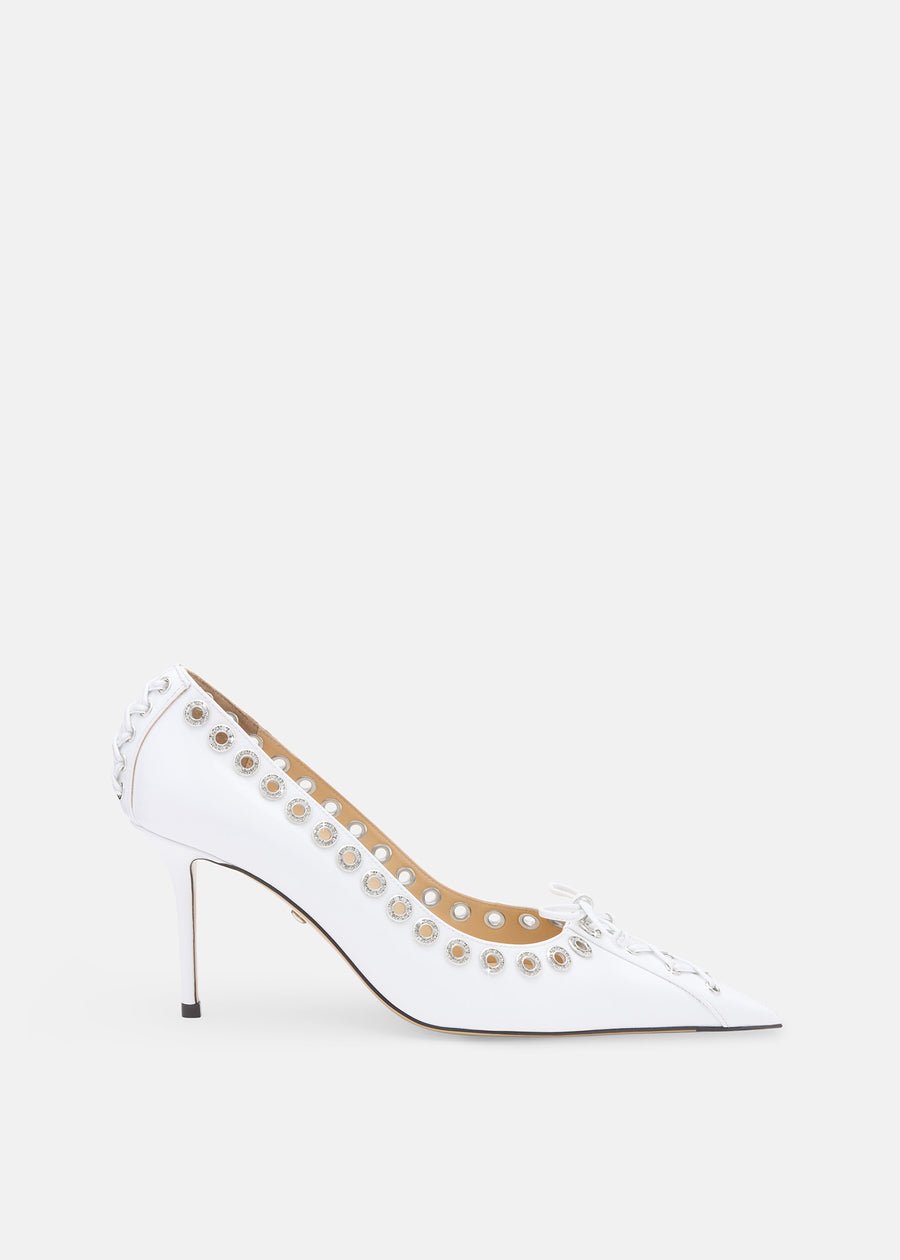
One pair on this page is allowed to be too much, and it should be chosen on purpose. Silver glitter with an orchid at the ankle, a clear PVC pump with a crystal button, a white pump laced up the front like a corset: these are the shoes for a bride whose dress is very plain and who wants one thing in the photographs that nobody expected. Wear them for the ceremony and the portraits. Then change.
Four · The flats
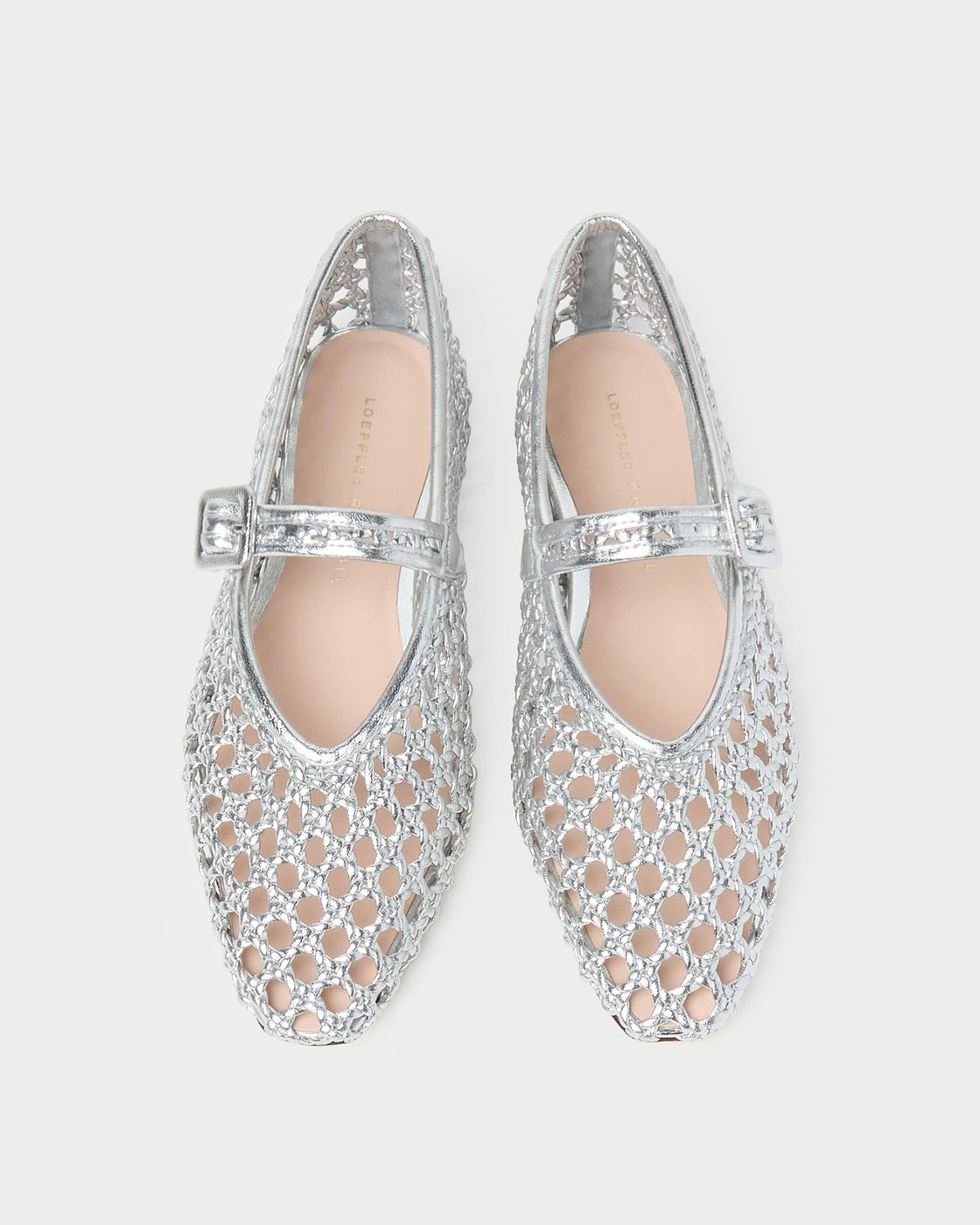
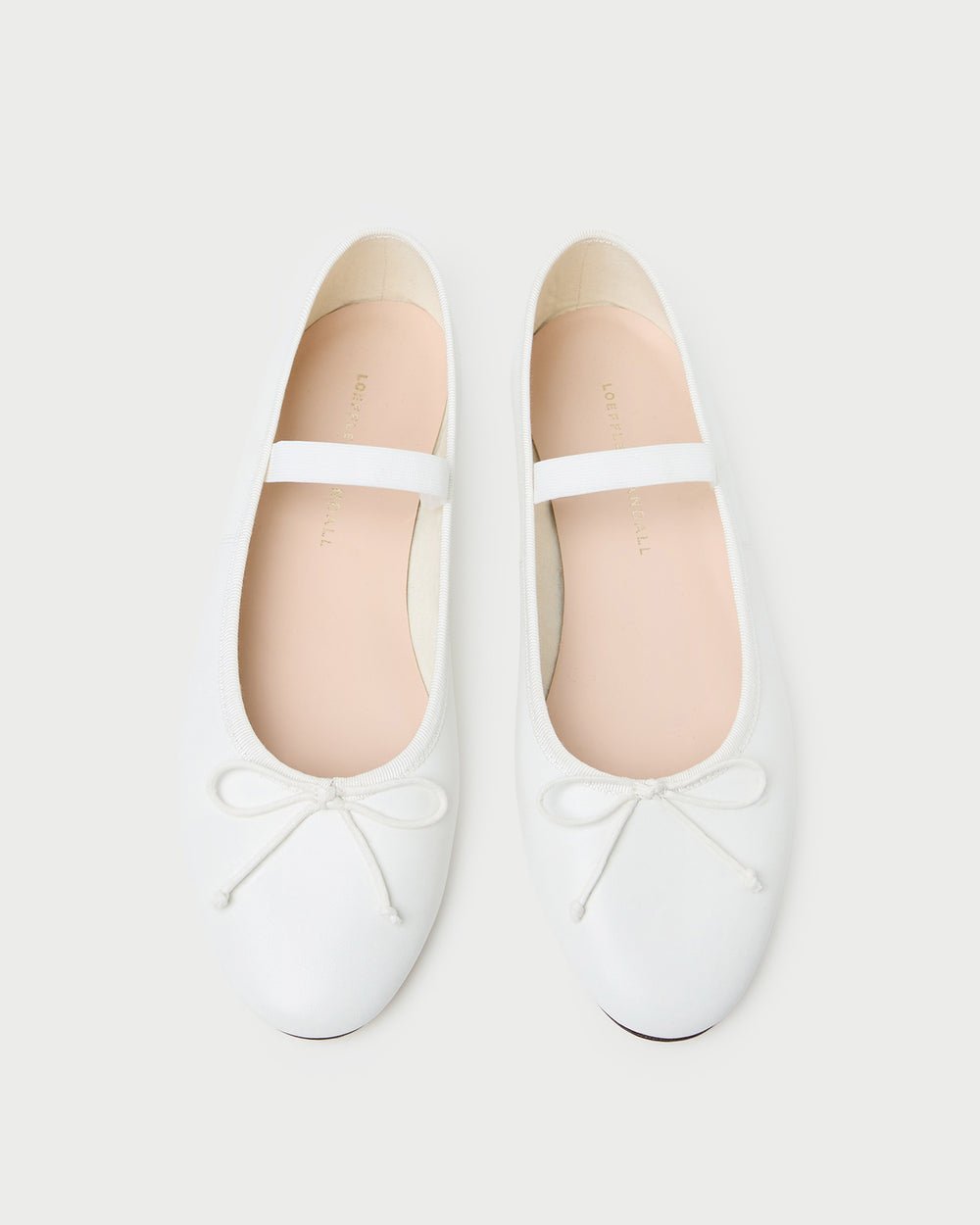
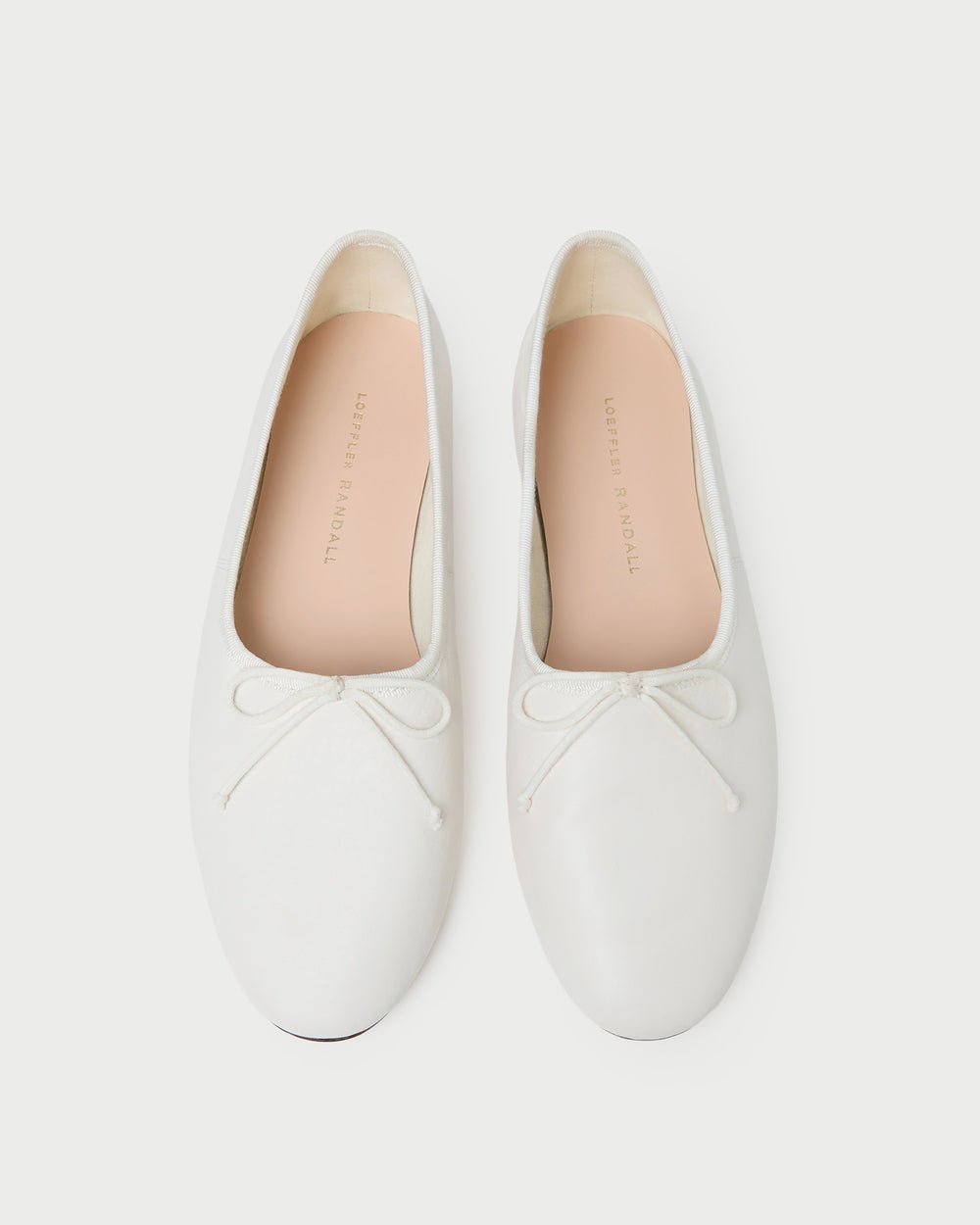
Three flats, because a bride needs one and will want another. The silver Mary Jane has a strap so it stays on through a dance floor. The two ballet flats are for the morning, the getting-ready photographs and the second half of the night, and either costs less than the alterations you would otherwise pay to shorten the dress for the heels you took off.
Buy the shoes in the size you are at four in the afternoon, not at nine in the morning, and walk in them on a hard floor at home for an evening before the wedding week. Satin does not stretch. Suede does, a little. Neither forgives a half size.
Two pairs is not extravagance. It is the difference between leaving the dance floor at eleven and staying.
— The UNSTAGED Studio