Almost every veil conversation starts with lace, and almost every one should start with length. Lace is a preference. Length is a decision about the photographs, about how you move through a room, and about whether anyone can reach you during dinner. Pick the length first and the rest becomes shopping.
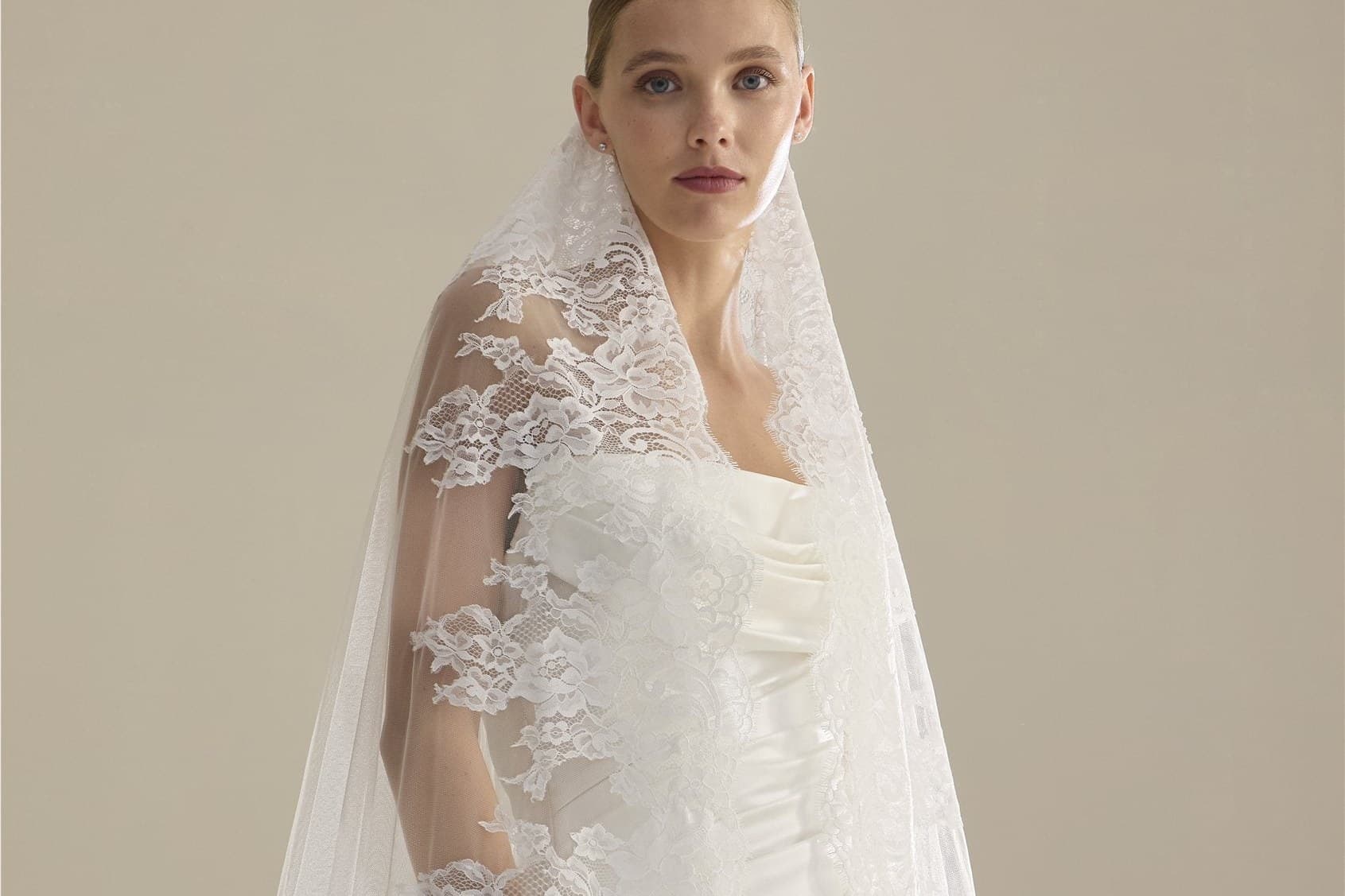
The rough rule: the longer the veil, the more the dress disappears beneath it. That is either the point or the problem, depending on the gown. A plain sheath can carry a cathedral veil and be transformed by it. An embellished skirt usually cannot — the two compete, and the dress you chose loses.
One · Cathedral and floor
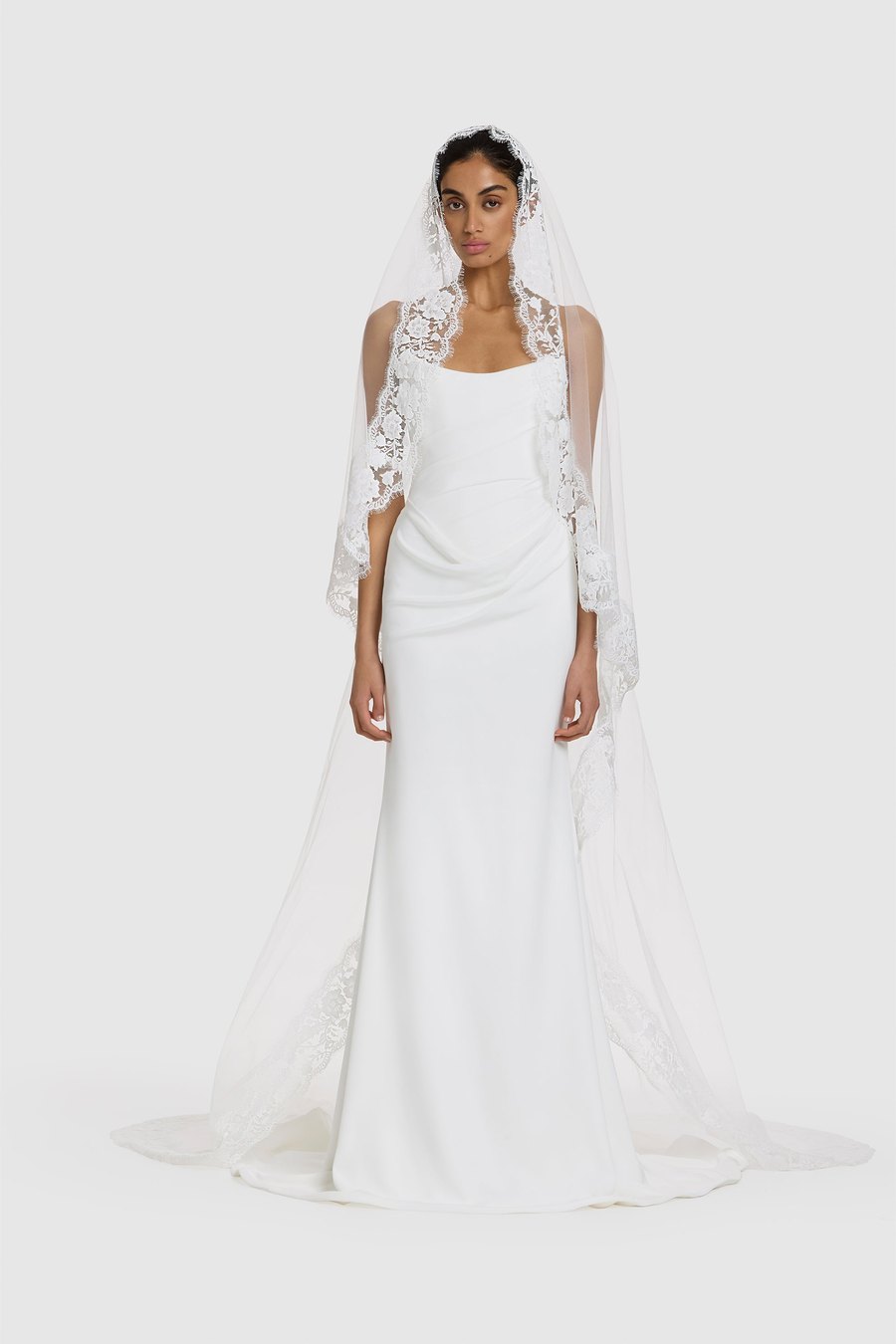
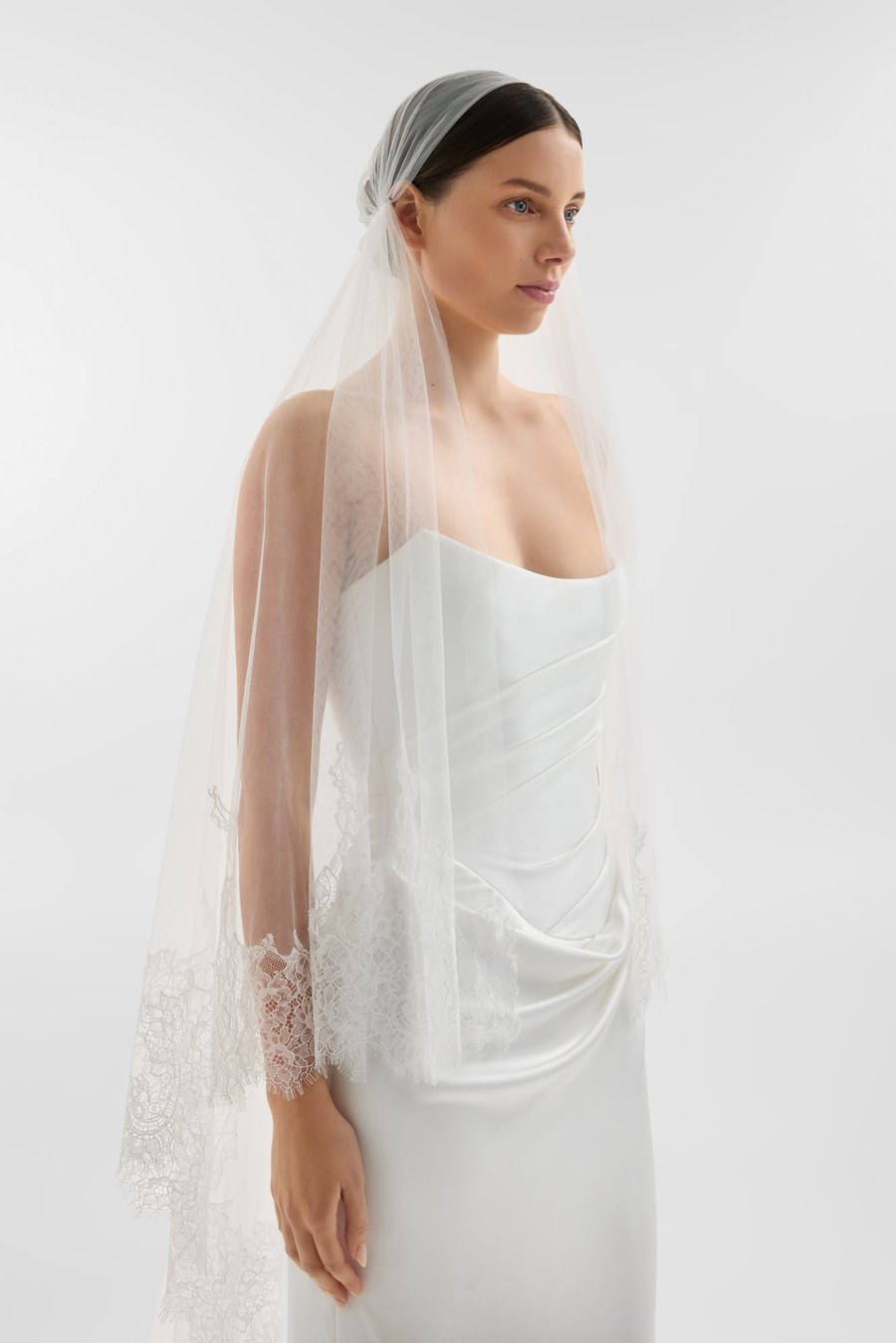
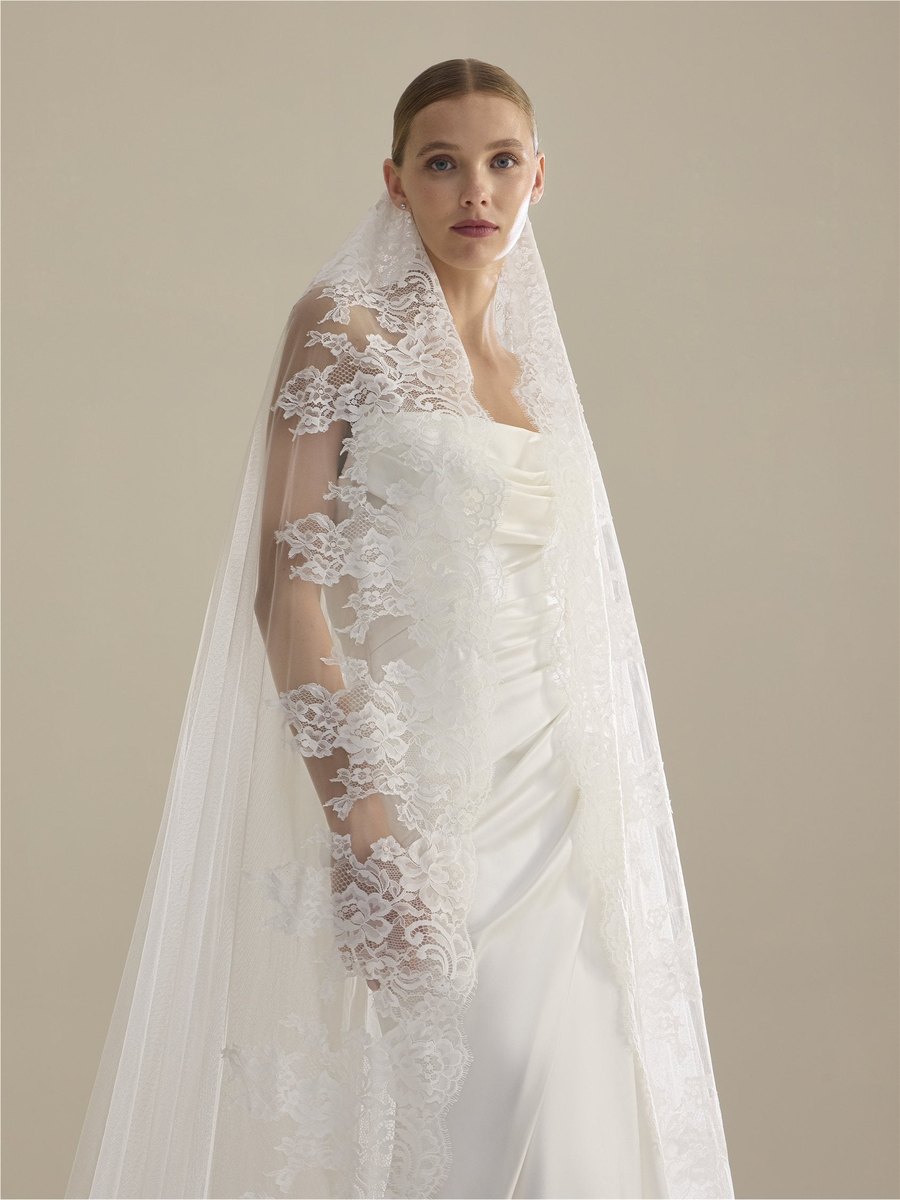
A cathedral veil needs one thing from your venue: room. A narrow aisle, a spiral staircase or a low-ceilinged barn will fight it all day, and someone will spend the ceremony arranging it behind you. Ask where it will be lifted and by whom before you fall for the length.
Two · Fingertip and elbow
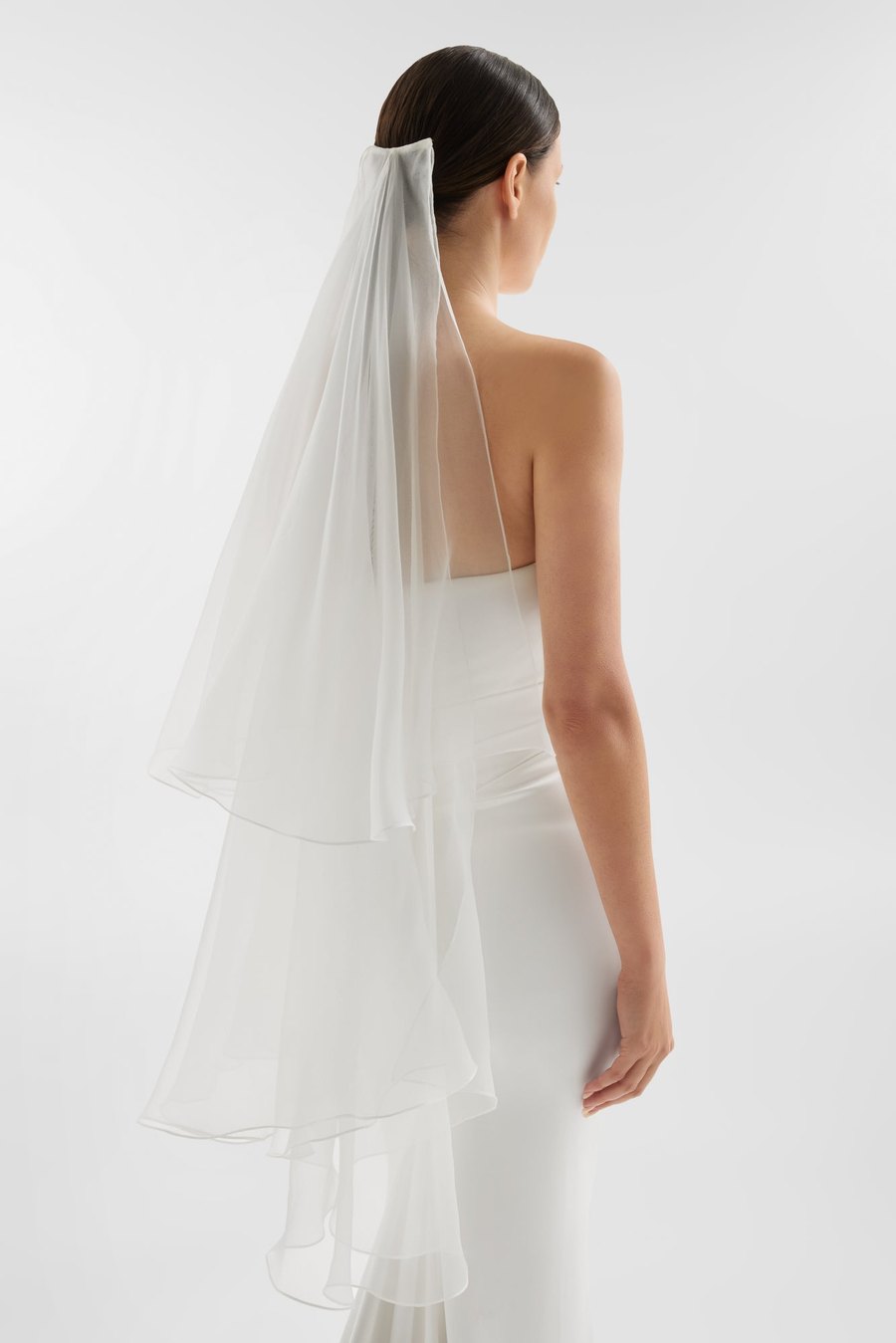
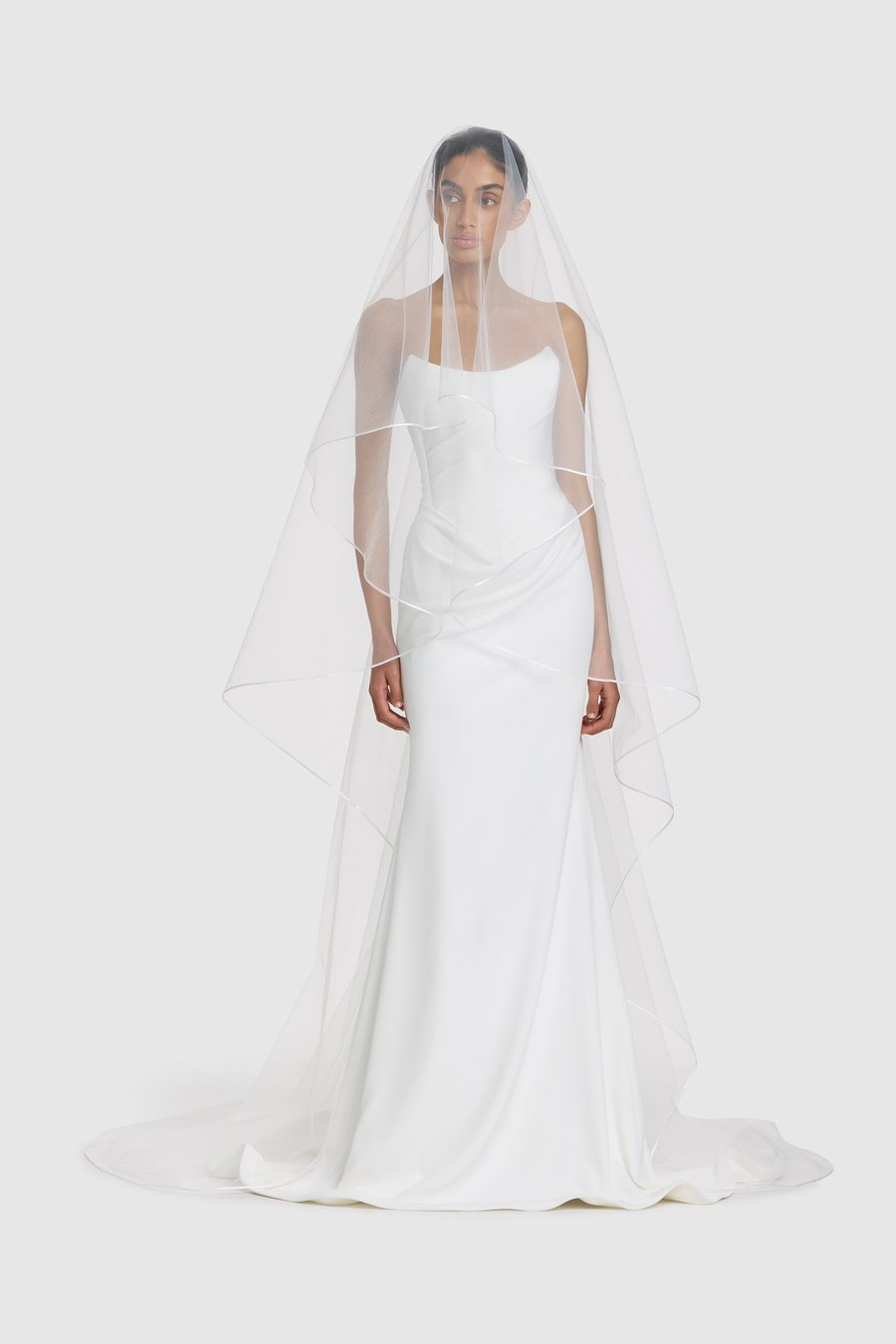
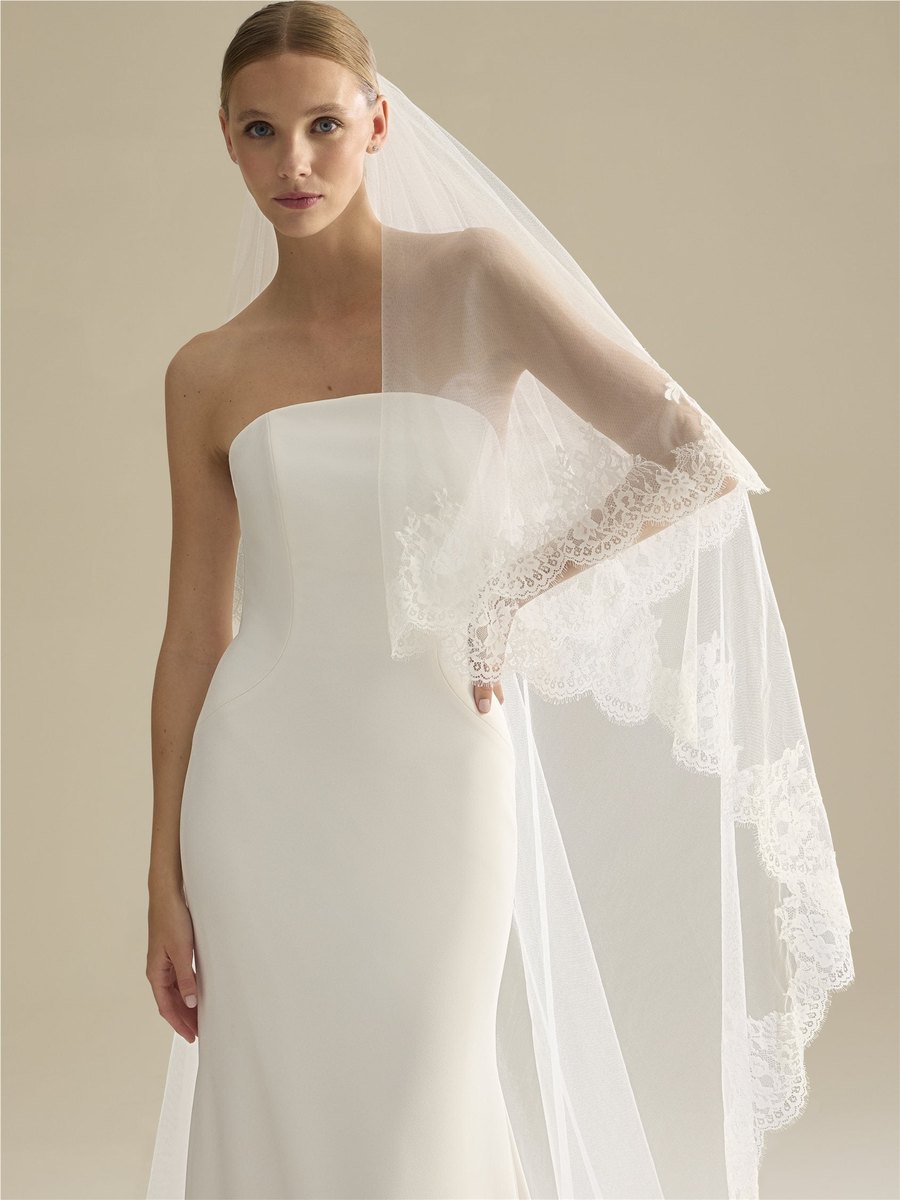
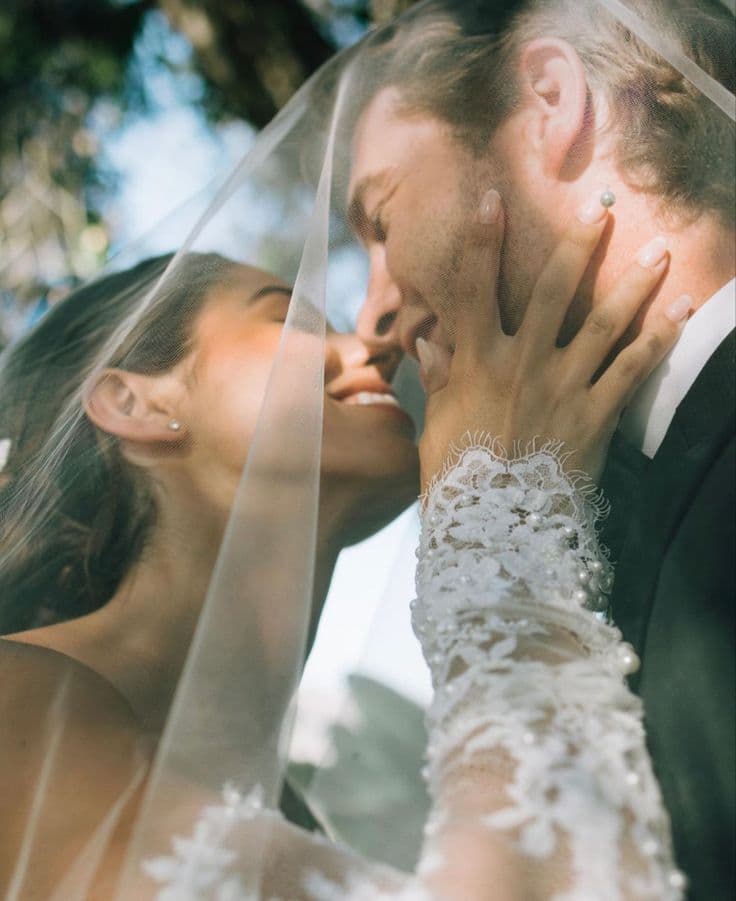
This is the length most people end up in and the one nobody photographs. It stops at the hand, which means you can hug people in it, sit down in it and keep it on past the ceremony. If you want to wear a veil all evening rather than for twenty minutes, it is this one.
Three · Short, netting and bows
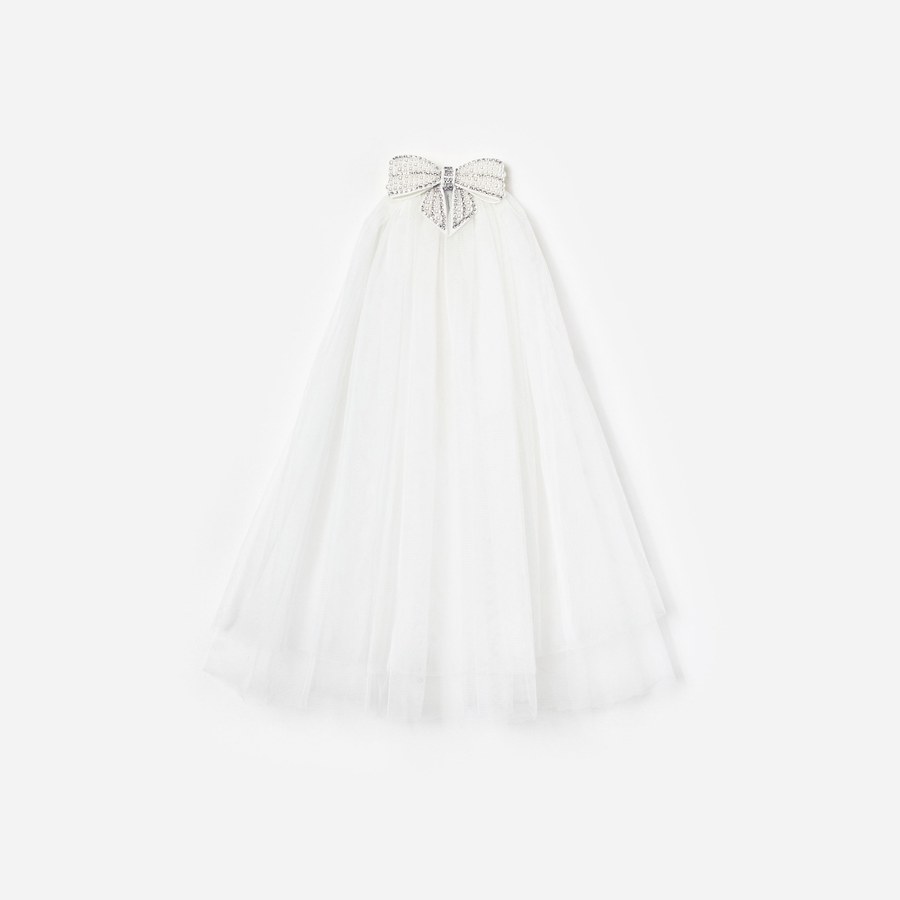
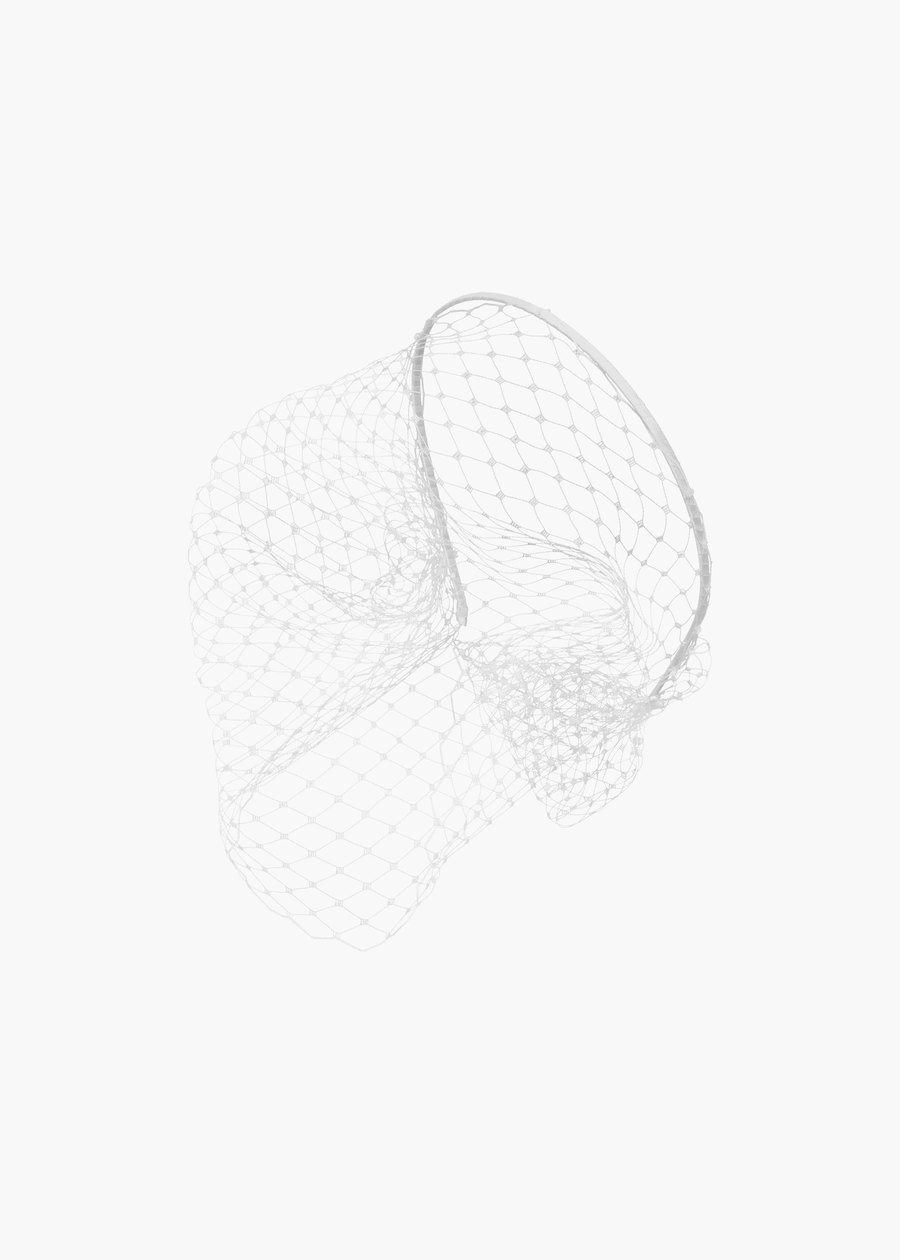
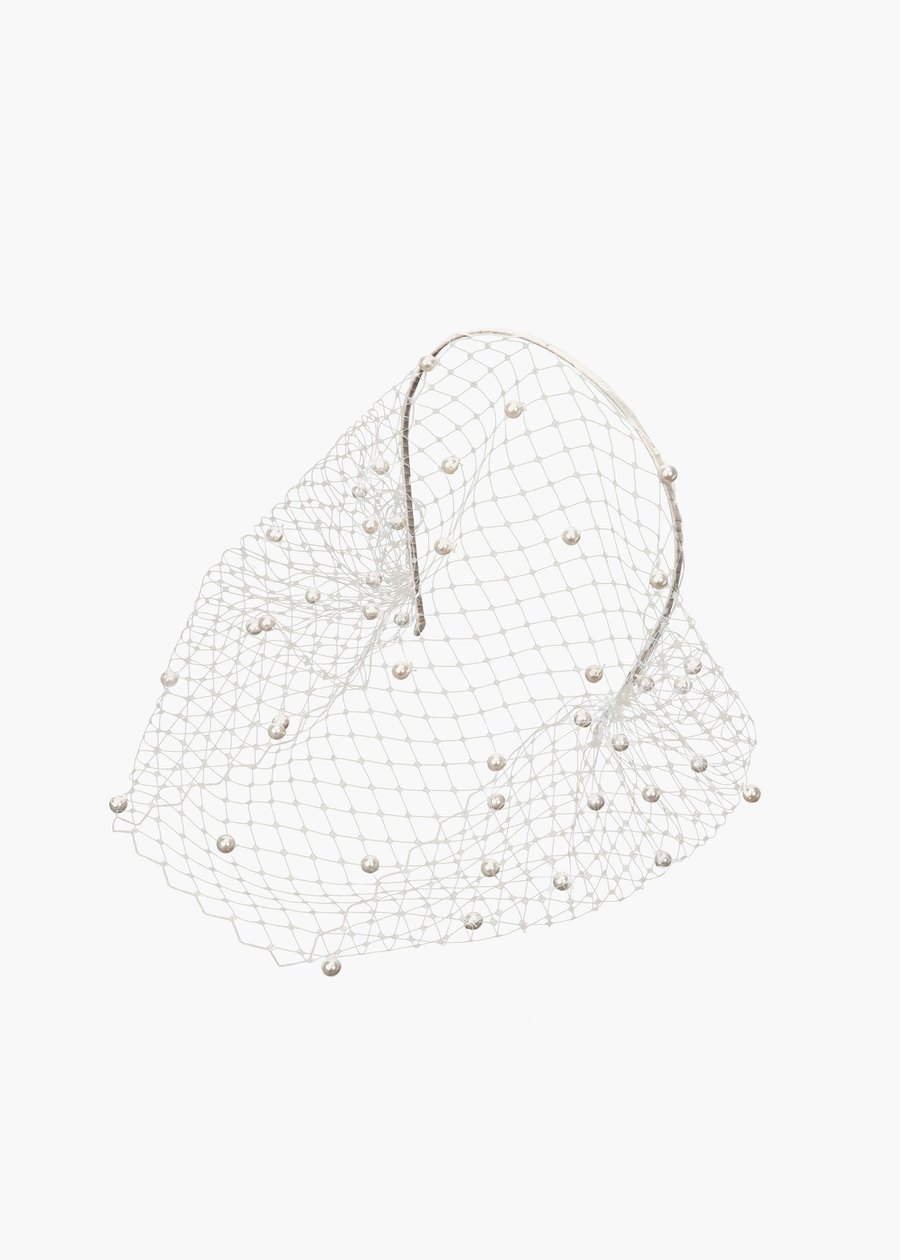
Netting does something the other two cannot. A cathedral veil changes your outline; a birdcage changes your face. It sits across the eyes, casts a fine shadow, and turns a plain dress into a decision. It is also the only veil on this page that works at a register office at noon, and the only one that costs less than a pair of shoes.
One practical note for all three. Order the veil after the dress and take a photograph of them together before you commit — ivory, bright ivory and nude read as three different colours in daylight and identical under a shop light. It is the most common and most expensive mistake in this category.
Try the short one even if you are certain you want the long one. It takes a minute, it costs nothing, and it is the length most people are surprised by.
— The UNSTAGED Studio