An art director's job is not to add. It is to decide. Faced with a thousand beautiful options, the whole skill is choosing the few that belong together and having the nerve to leave the rest out. A wedding asks exactly the same of you, whether or not anyone ever calls it art direction. The days that feel considered are simply the ones where someone made a small set of quiet decisions early, and then held them.
You already have the raw material: the images you keep saving, the colours you return to, the venue that made you go quiet the first time you saw it. What you need is a way to turn all of it into one room that reads as a single idea, rather than a moodboard that escaped. Here is how a stylist would run it.
Let the room lead
Before palette, before flowers, before anything you can hold in your hand, there is the space. A good art director reads the location first and works with what it already wants to be. A crumbling villa does not want to be dressed as a ballroom. A white gallery does not want rustic garlands. Fighting the room is the most expensive mistake you can make, and it always shows in the photographs. Choose the place whose natural character sits closest to the feeling you are after, then let it do most of the work.
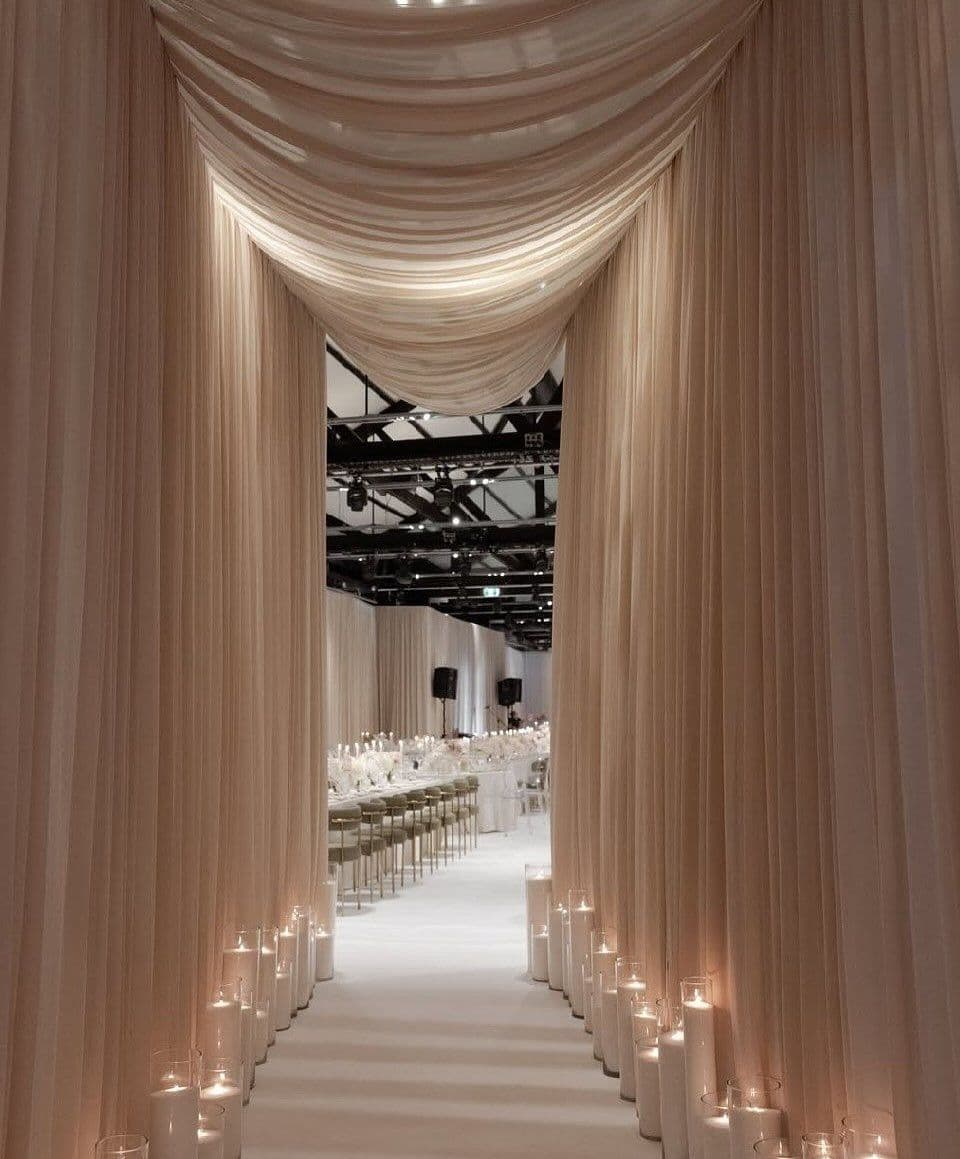
Choose a palette, then defend it
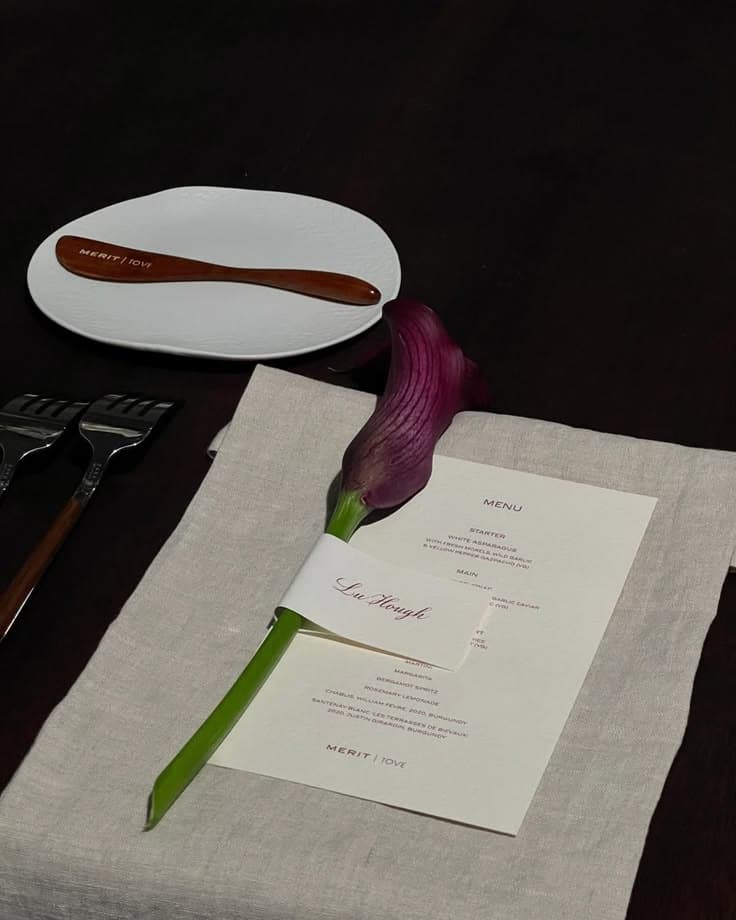
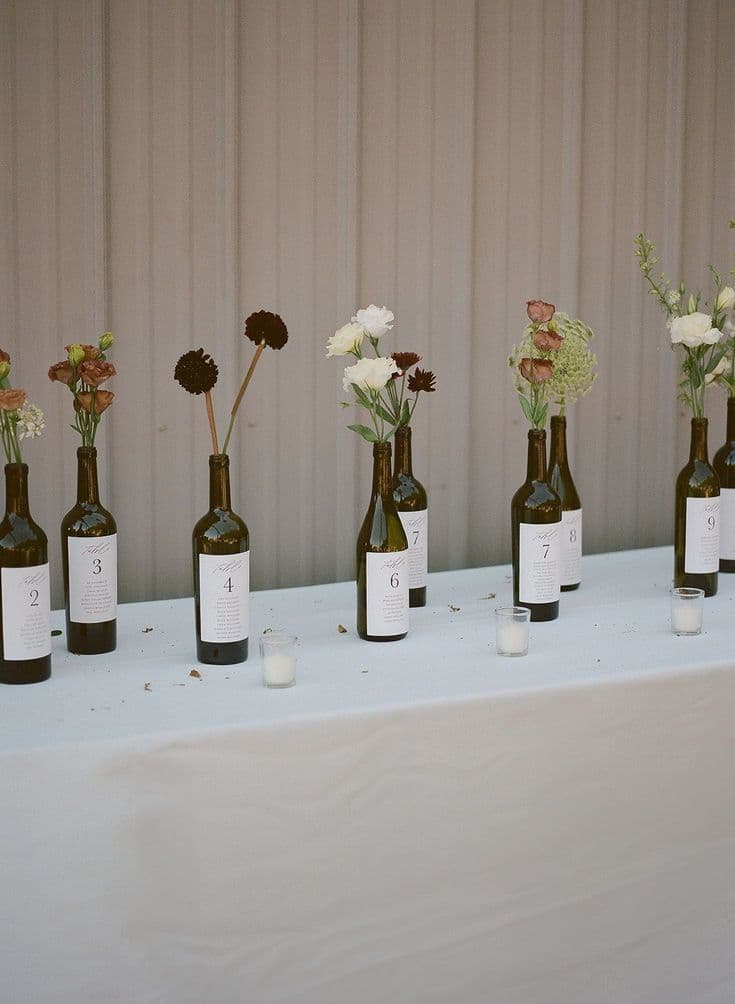
Three tones is usually enough. A ground, a soft neutral to carry most of the surface, and one accent used sparingly enough that it still means something when it appears. Write them down. Then treat every later choice as a question with a yes or a no: does this belong to the palette, or not. The discipline is not in choosing beautiful colours. It is in refusing the beautiful colour that does not fit.
This is where most weddings quietly lose their coherence. Not in one bad decision, but in fifty small permissions. A napkin here, a bloom there, each lovely on its own and none of them speaking to the others. Hold the palette the way an art director holds a shot list. Everything in frame has to earn its place.
"Coherence is not built by adding the right things. It is built by refusing the wrong ones, over and over, without apology."
Direct the light
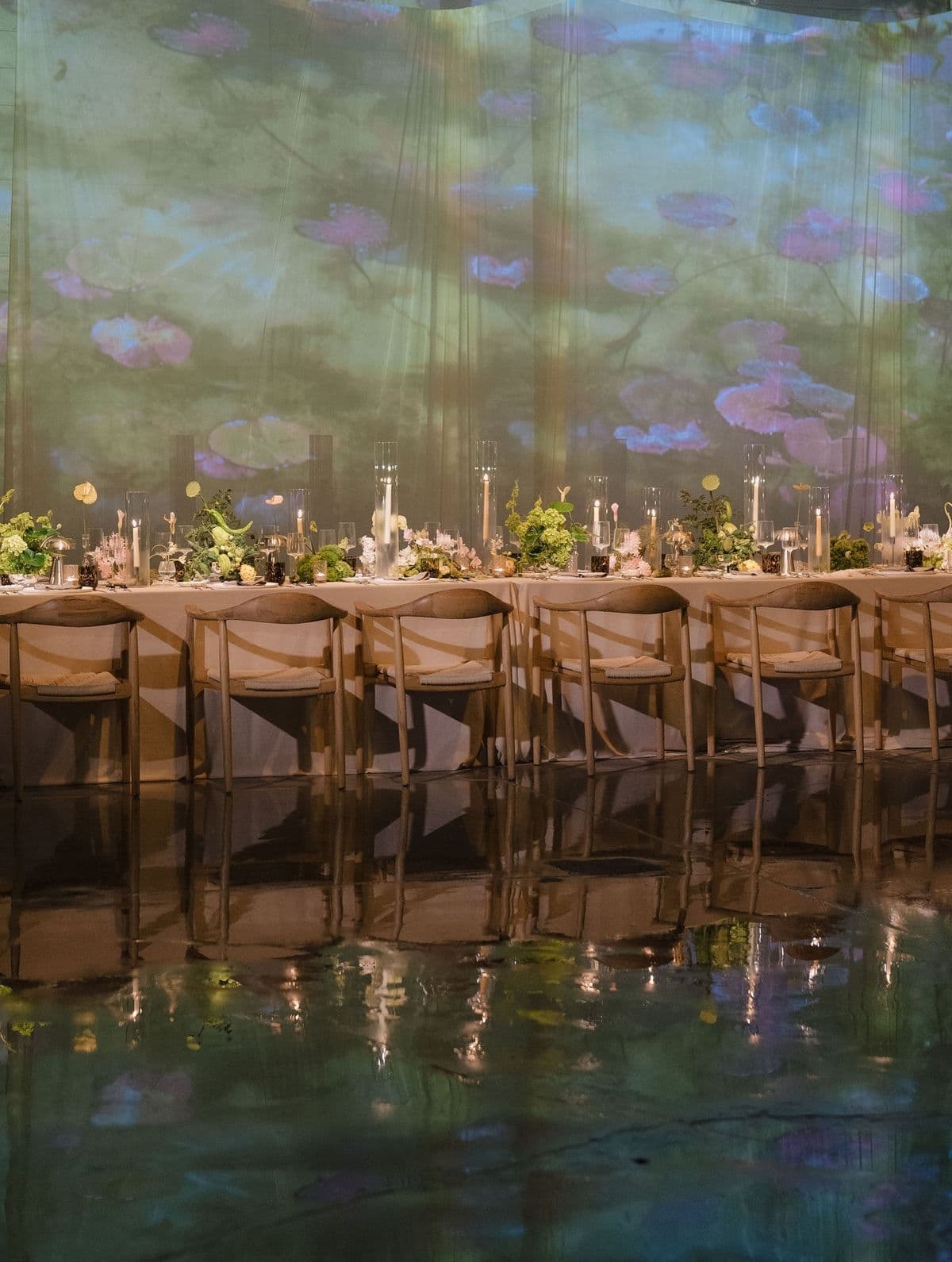
Light is the element couples plan last and remember most, and it is the cheapest lever you have. Decide the hour your day should peak, then build backward from it. The ceremony timed so the sun sits low and kind. Dinner lit by candle rather than by the ceiling. The one harsh downlight in the room switched off entirely. Mixed colour temperatures are the quiet killer of a beautiful space: warm candlelight fighting cool daylight fighting a blue-white bulb reads as chaos even when no one at the table can name why. Pick one temperature, and protect it.
Build with texture, not things
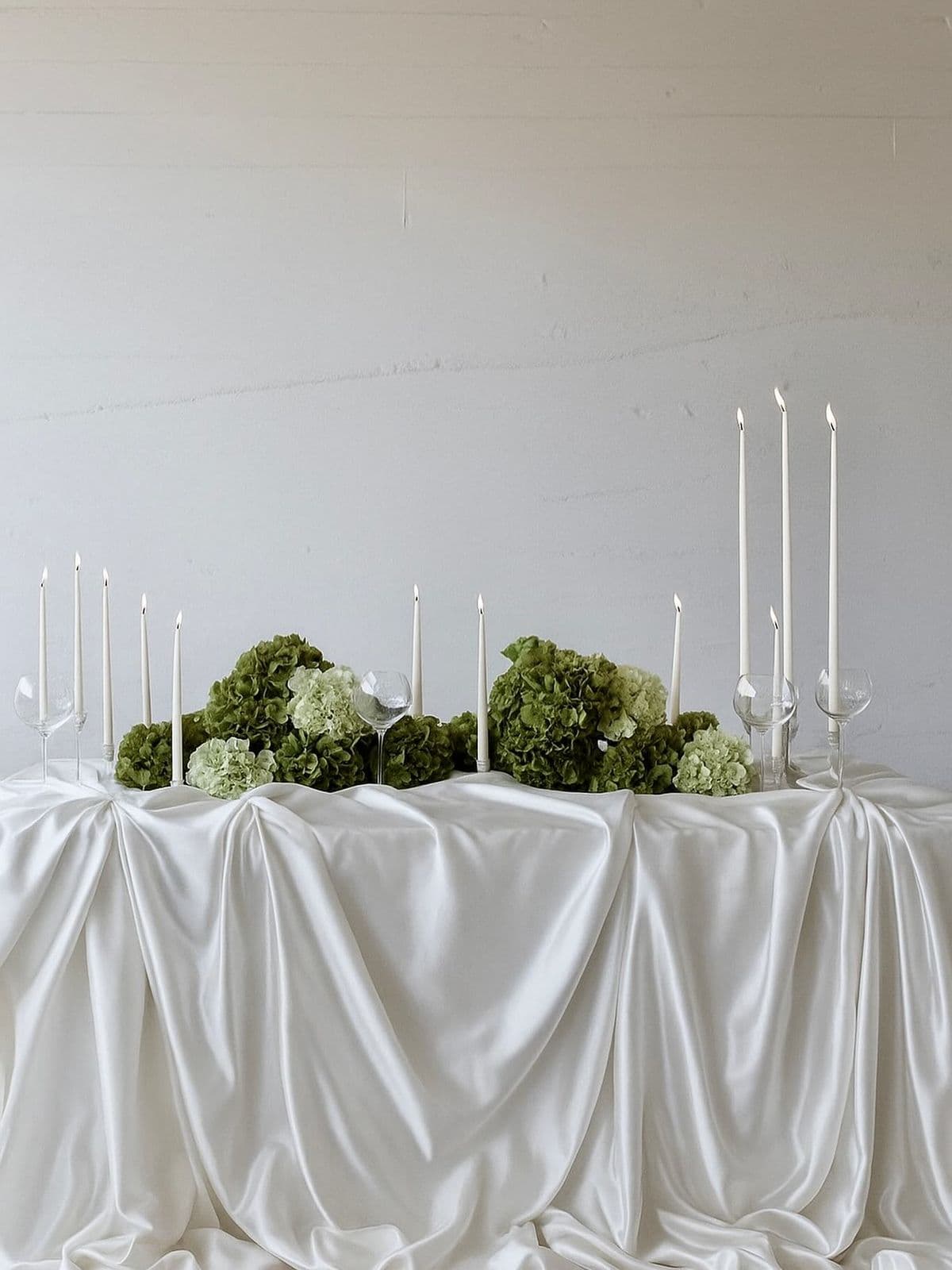
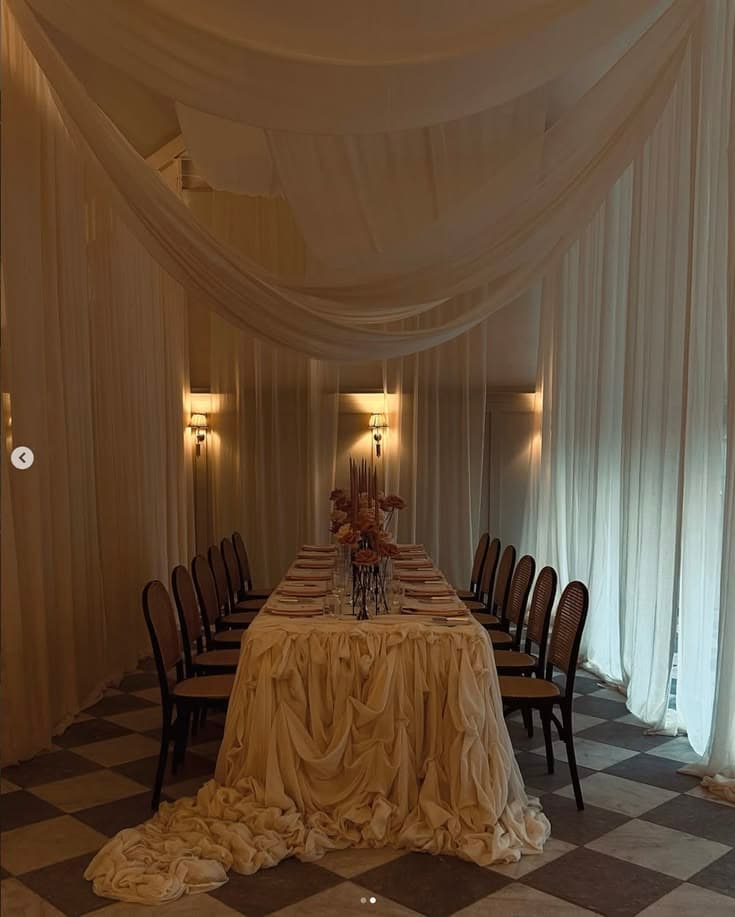
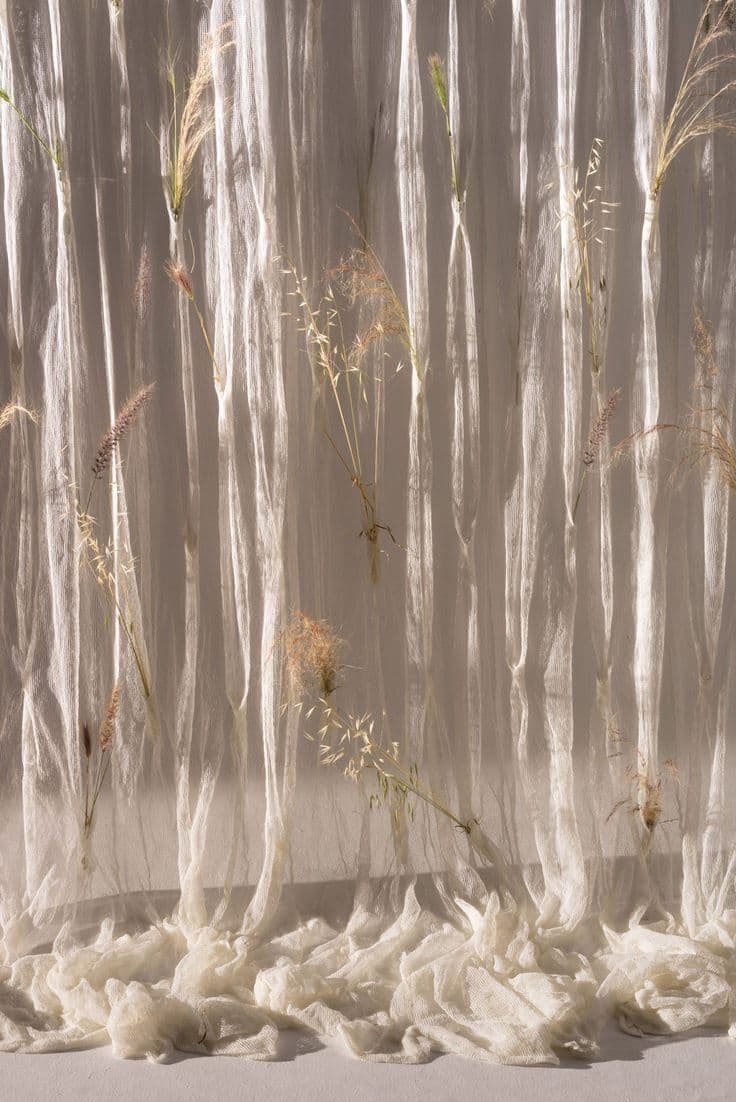
When a table looks empty, the instinct is to add objects. The art director’s instinct is to add texture instead. Linen with a slub to it. Wax that has pooled and run down a taper. Raw silk, stone, dried grasses, a candle already burned halfway down. Texture gives a room depth without adding clutter, and it photographs as richness rather than as expense. A single beautifully creased tablecloth does more than a second round of florals ever will.
Style in threes, then take one away
Stylists group in odd numbers and leave air between the groups, because the eye reads a considered gap as intention and a crowded surface as anxiety. Build your details into small vignettes, three things that belong together, and then, when you think you are finished, remove one thing from every surface. The empty space you are tempted to fill is almost always the most expensive-looking part of the frame.
The art director's checklist
One reference, not a hundred
Choose the single image that holds the whole feeling. Every decision after it is measured against that one frame.
Three tones, held firmly
A ground, a neutral, one accent. If a choice doesn't belong to the three, it doesn't come in.
One light temperature
Warm or cool, never both. Kill the overhead downlight and let candle and low sun do the work.
Texture before objects
Linen, wax, stone, dried stems. Depth comes from surface, not from adding more things.
Then remove one thing
From every table, every shelf, every frame. The gap is the part that reads as considered.
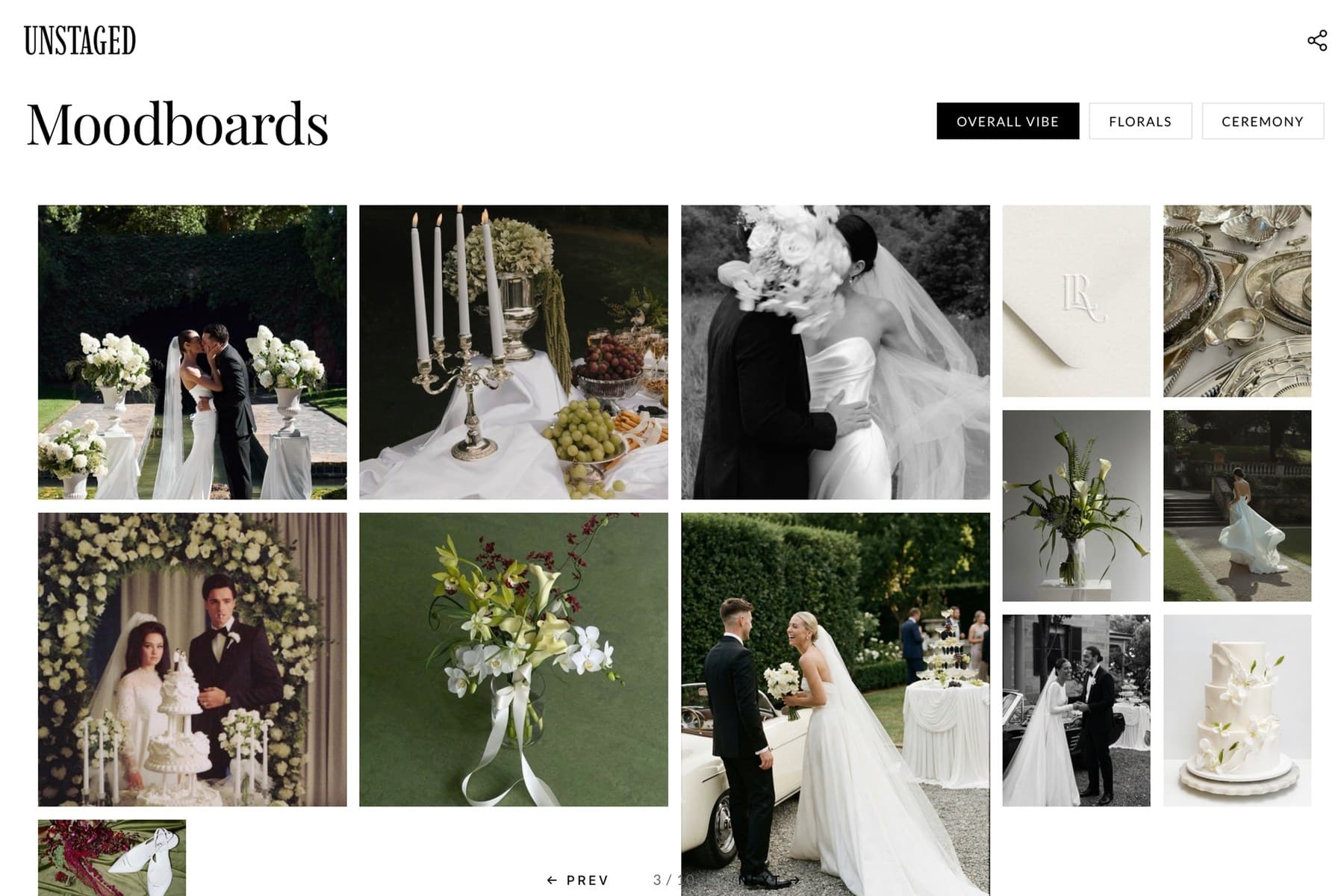
The boards and the palette described here are what moodboards in UNSTAGED are for: shared with your partner, and sent to your vendors as one link.
None of this is about making your wedding look like a magazine. It's about making a hundred small choices answer to one idea, so the day feels like it could only ever have been yours.
Save this one for the week the decisions start to pile up.
— The Edit
Planning your own wedding? Try UNSTAGED free for seven days.
Start free trial